What this is
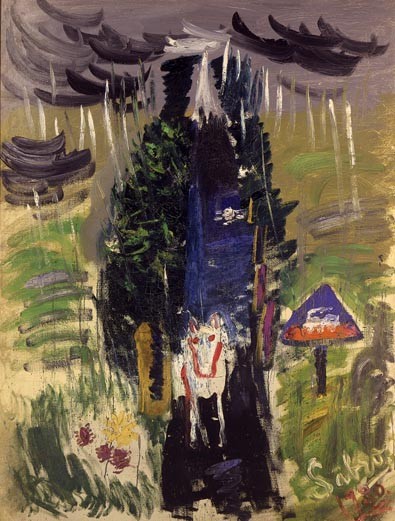
This exhibition at the National Museum of Modern Art, Tokyo (MOMAT) marks the 120th anniversary of the birth of Hasegawa Saburo (1906–1957), one of Japan's most significant yet underappreciated pioneers of abstract art. The show traces his remarkably multifaceted career as a painter, critic, curator, and theorist, offering a rare comprehensive look at a figure who shaped the trajectory of modern Japanese art. Alongside his own works, the exhibition features pieces by related artists, contextualising Hasegawa's influence through the landmark exhibitions he organised and his prolific critical writings. MOMAT is Japan's foremost museum of modern art, making it the ideal institution to host a retrospective of this scope and significance.
Who should go
This exhibition is ideal for art lovers with an interest in 20th-century Japanese modernism, abstraction, and the intellectual currents that connected Japan to international avant-garde movements. It will appeal to anyone curious about how Japan developed its own modern art identity, as well as visitors who enjoy exhibitions that blend visual art with critical and curatorial history. The calm, scholarly atmosphere of MOMAT suits those who prefer a contemplative museum experience over a crowded spectacle. Arrive on a Friday or Saturday evening after 5:00 p.m. to benefit from the discounted admission and quieter galleries.
Good to know
Tickets can be purchased at the MOMAT box office on the day — no advance booking is typically required for standard exhibitions, and the low admission price means queues are rarely an issue. Foreign credit cards are generally accepted at MOMAT's ticket counter, but carrying cash (yen) as a backup is always advisable. The museum is closed on Mondays (or the following Tuesday if Monday is a public holiday), so check the schedule before visiting. MOMAT has a bag check area for larger items, and photography policies vary by exhibition — look for signage in each gallery. The museum also houses a permanent collection of over 13,000 works on its upper floors, which is well worth exploring after the special exhibition.
This event was sourced and translated from Japanese by What's On Japan. Details may change — verify with the official source before attending.