What this is
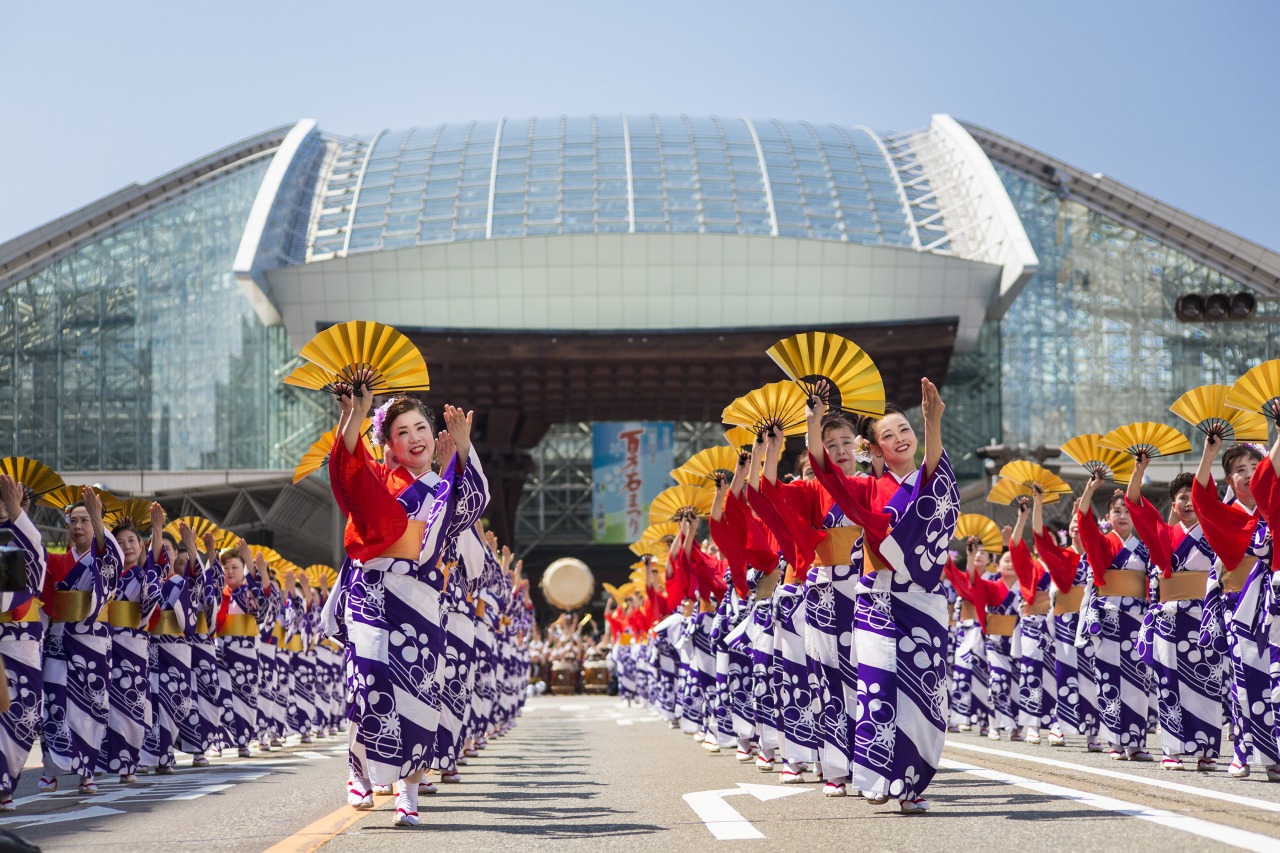
Hyakumangoku Matsuri is Kanazawa's most important annual festival, held each year in early June to commemorate the 1583 arrival of feudal lord Maeda Toshiie, whose rule transformed Kanazawa into one of Japan's great cultural capitals. The festival's name reflects the enormous wealth of the Maeda domain — 'hyakumangoku' refers to its rice production capacity of one million koku, roughly 150,000 tonnes. The centerpiece is a grand parade in which 2,500 participants dress in authentic 16th-century period costumes to reenact Lord Maeda's procession into Kanazawa Castle, winding through several city blocks in a spectacle of feudal pageantry. The three-day celebration extends well beyond the parade, encompassing evening bon dances stretching for kilometers along central streets, floating lantern ceremonies on the Asano River, tea ceremonies in the celebrated Kenroku-en garden, and demonstrations of traditional performing arts. As one of the largest and most historically grounded matsuri in the Hokuriku region, it offers a rare window into Japan's samurai-era heritage in a city that remains relatively off the main tourist trail.
Who should go
History enthusiasts and culture seekers will find this one of Japan's most compelling feudal-era reenactments, combining genuine local pride with spectacular visual drama. The atmosphere transitions beautifully across the day — from solemn historical pageantry during the daytime parade to joyful, inclusive community celebration during the evening bon dances, where spectators are actively encouraged to join the procession. Families will appreciate the children's drum and lantern parades and the many accessible viewing spots along the route, while photographers will be in their element capturing elaborate period costumes and the ethereal glow of Kaga Yuzen lanterns drifting down the Asano River at dusk. Arrive early on parade day — ideally 30 to 45 minutes before the procession begins — to secure a good viewing position along the route near Kanazawa Castle.
Good to know
The parade and bon dances are free to watch from the street, making this an exceptionally accessible festival for visitors on any budget. Tickets are not required for any of the main outdoor events, though some ancillary performances or tea ceremonies in Kenroku-en may have a small entry fee — carry cash in yen as smaller vendors and garden entry booths rarely accept cards. The parade route runs through central Kanazawa and can draw very large crowds, so staking out a spot near the Kanazawa Castle end of the route at least 30–40 minutes before the procession is strongly advised. The lantern floating on the Asano River the evening before the main parade is one of the most photogenic moments of the entire festival and is far less crowded — arrive around sunset near Tenjin-Bashi bridge. Foreign visitors will find Kanazawa's compact city centre easy to navigate on foot or by the Kanazawa Loop Bus, which stops near all the key festival locations.
This event was sourced and translated from Japanese by What's On Japan. Details may change — verify with the official source before attending.