What this is
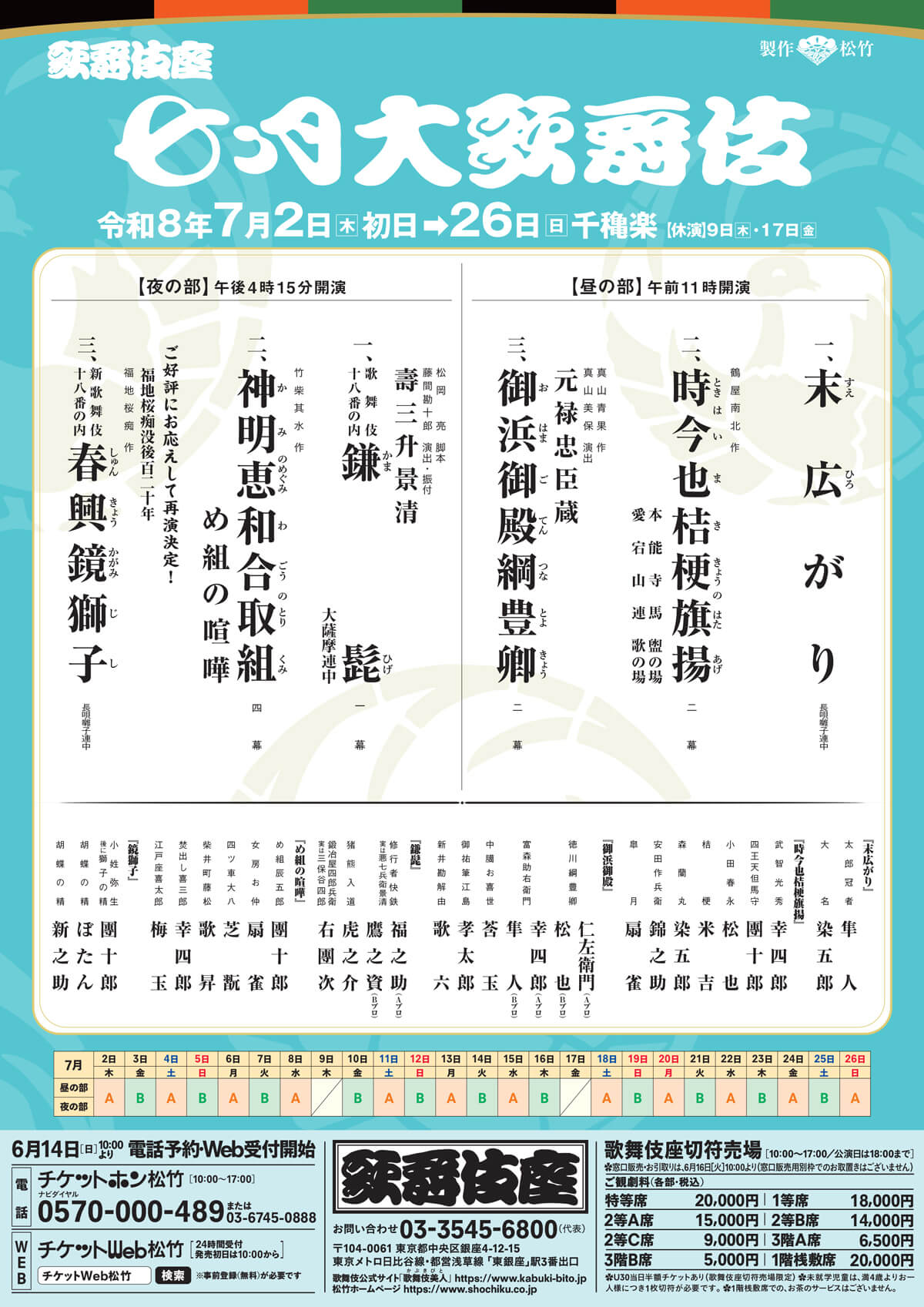
Kabuki is one of Japan's most celebrated traditional performing arts, combining elaborate costuming, stylised movement, music, and dramatic storytelling into a uniquely Japanese theatrical experience. Kabukiza Theatre in Ginza is the spiritual home of kabuki in Tokyo, a purpose-built venue that has hosted performances since 1889 and was most recently rebuilt in 2013. July's programme follows the traditional monthly rotation system, with matinee and evening shows running daily throughout the month, each featuring a curated selection of acts from the classical repertoire. Attending a performance here is not merely entertainment — it is a direct encounter with a UNESCO-designated Intangible Cultural Heritage that has shaped Japanese aesthetics for over 400 years.
Who should go
Anyone with an interest in Japanese culture, theatre, or traditional arts will find Kabukiza an extraordinary experience, even without prior knowledge of kabuki. The visual spectacle — the onnagata (male actors playing female roles), the hanamichi runway through the audience, the sudden mie poses — is captivating regardless of language. First-time visitors and seasoned Japan travellers alike consistently rate it among Tokyo's most memorable cultural experiences. English-language audio guides are available for rent at the theatre, making it highly accessible to foreign visitors — pick one up before taking your seat.
Good to know
Tickets for full programmes can be purchased through the official Shochiku website (shochiku.co.jp) or at the Kabukiza box office — foreign credit cards are accepted online and at the box office. The single-act (hitomaku-mi) tickets sold on the day from the fourth-floor entrance are a fantastic option for visitors short on time, priced from around ¥1,000 depending on the act. Kabukiza holds approximately 1,808 seats across a raked auditorium — it is a fully seated, traditional theatre with good sightlines from most positions. English-language audio guides (earphone guides) are available for rent near the entrance for around ¥700 and provide real-time commentary and plot summaries — essential for non-Japanese speakers. Arrive at least 20 minutes early to collect your guide, find your seat, and explore the basement shopping arcade and food stalls before the curtain rises.

This event was sourced and translated from Japanese by What's On Japan. Details may change — verify with the official source before attending.