What this is
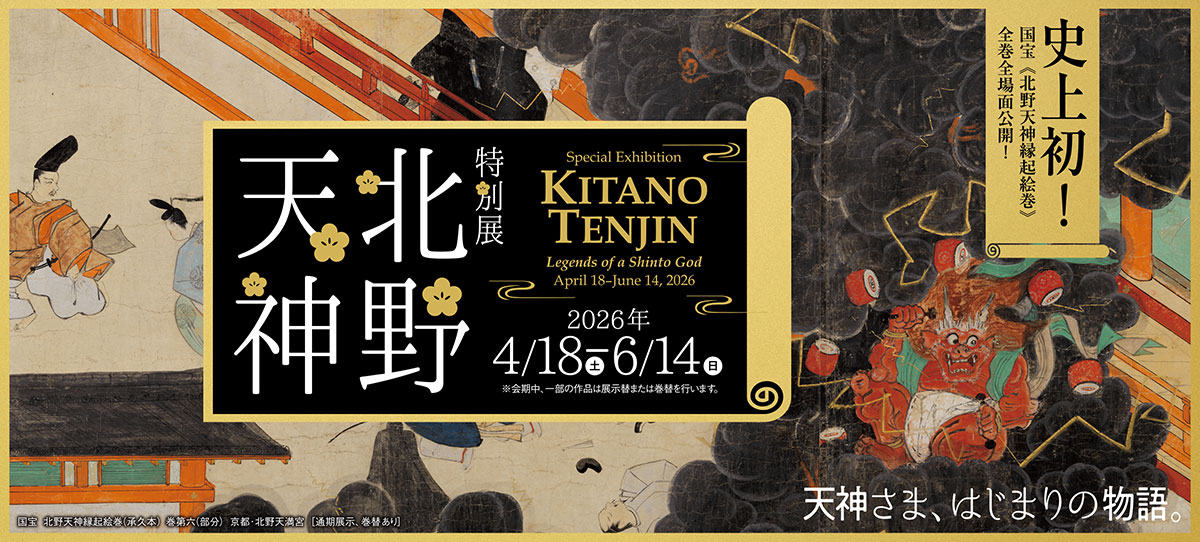
This special exhibition at the Kyoto National Museum explores the mythology, worship, and cultural legacy of Kitano Tenjin — the deified form of Heian-era scholar and statesman Sugawara no Michizane, enshrined at Kyoto's Kitano Tenmangu shrine. Through carefully curated artifacts and artworks, the exhibition traces how Michizane transformed from a historical figure into one of Japan's most revered Shinto deities, patron of learning and scholarship. Visitors can expect to encounter painted scrolls, ritual objects, calligraphy, and devotional art spanning centuries of Tenjin worship. The exhibition offers a rare opportunity to understand how Shinto mythology is constructed and sustained through visual culture and material heritage.
Who should go
This exhibition is ideal for anyone with an interest in Japanese religion, history, art, or mythology — particularly those who have visited Kitano Tenmangu or Dazaifu Tenmangu and want to deepen their understanding of the deity enshrined there. History enthusiasts, art lovers, and students of Japanese culture will find the curated artifacts genuinely illuminating. The Kyoto National Museum's English-language support makes this accessible to international visitors even without prior knowledge of Shinto. Pick up an English audio guide or exhibition booklet at the entrance to get the most out of the displays.
Good to know
Tickets for special exhibitions at the Kyoto National Museum are sold at the venue box office and increasingly via online pre-purchase on the museum's official website — foreign credit cards are generally accepted at the box office. The museum is a large, well-staffed institution with English signage throughout, making it one of the more foreigner-friendly cultural venues in Kyoto. Allow at least 90 minutes for the special exhibition alone; the permanent collection galleries may require additional time if you wish to explore them. The museum's Heisei Chishinkan wing, designed by I.M. Pei, houses the main galleries and has bag lockers available near the entrance. Arrive at opening time (typically 9:30 AM) on weekdays for the quietest experience.
This event was sourced and translated from Japanese by What's On Japan. Details may change — verify with the official source before attending.