What this is
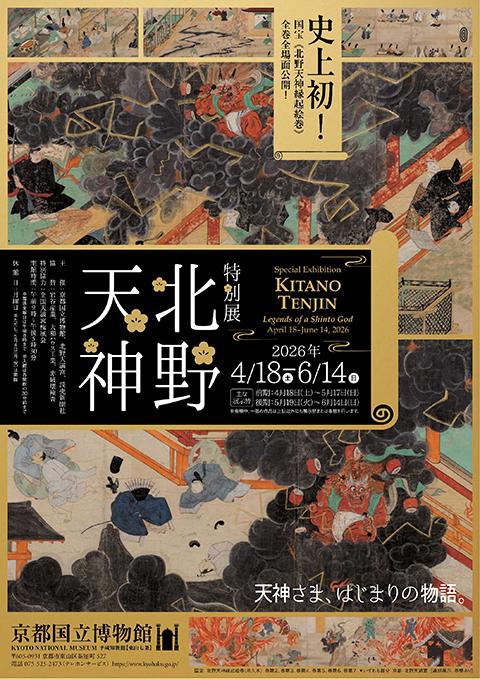
This special exhibition at Kyoto National Museum focuses on Kitano Tenjin, the deified spirit of Sugawara no Michizane — a 9th-century scholar and poet who became one of Japan's most venerated deities, enshrined at Kitano Tenmangu in Kyoto. Michizane is worshipped as the god of scholarship, learning, and calligraphy, and the artistic tradition surrounding his legend spans over a millennium of Japanese painting, calligraphy, and decorative arts. The exhibition brings together works from this rich devotional tradition, offering a rare opportunity to see how his image and story were depicted across different periods and artistic styles. Held in the Heisei Chishin Hall — the main gallery building of Kyoto National Museum — this is a focused, scholarly exhibition that illuminates the intersection of religion, court culture, and artistic patronage in premodern Japan.
Who should go
This exhibition is ideal for visitors with an interest in Japanese history, classical art, religion, or calligraphy who want to go beyond surface-level tourism. Art lovers, students of Japanese culture, and anyone who has visited Kitano Tenmangu shrine will find deep context and visual richness here. The atmosphere is quiet and contemplative, typical of Kyoto National Museum's well-curated special exhibitions, making it a good choice for solo travellers or couples seeking a thoughtful cultural experience. Arrive early on weekdays to enjoy the galleries without crowds, as Kyoto museum exhibitions can draw significant local audiences.
Good to know
Tickets can be purchased in advance at Lawson or Seven-Eleven convenience store terminals (search for the exhibition name or Kyoto National Museum), which is the easiest option for foreign visitors as no Japanese address is needed for in-store pickup. The Heisei Chishin Hall is Kyoto National Museum's main modern gallery building, completed in 1966 and renovated — it is a fully seated, climate-controlled indoor space with good English labelling for special exhibitions. The museum typically opens at 9:30am and closes at 17:00 (last entry 16:30); arriving at opening time on a weekday is the best way to avoid school groups and tour parties. Large bags and backpacks must be stored in coin lockers near the entrance. The museum café and museum shop are worth visiting after the exhibition.
This event was sourced and translated from Japanese by What's On Japan. Details may change — verify with the official source before attending.