What this is
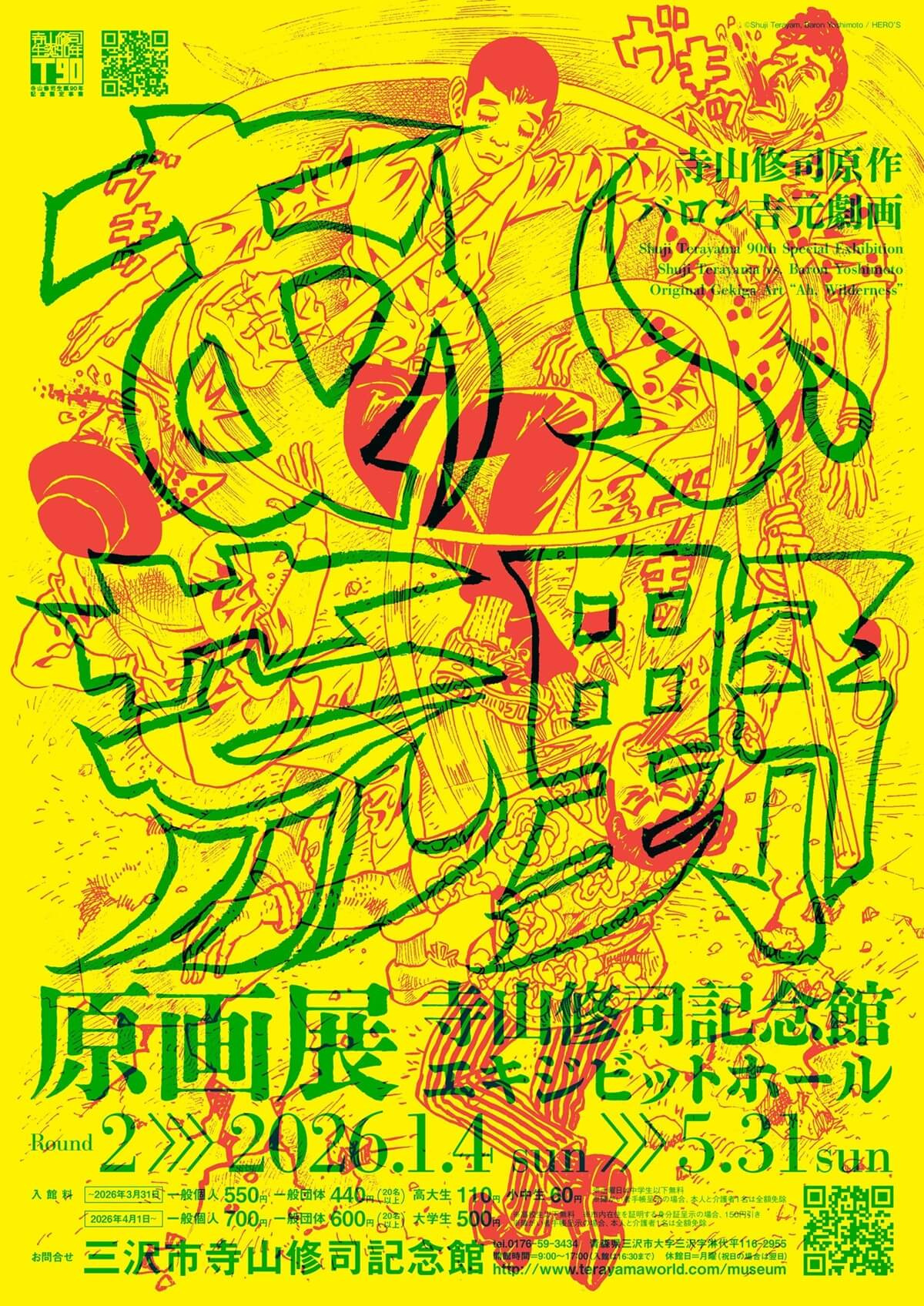
This exhibition commemorates the 90th birthday of Shūji Terayama (1935–1983), one of Japan's most influential and provocative avant-garde artists, who reshaped theatre, film, and poetry through his countercultural vision. The show centres on original artwork from 'Ah, Wilderness,' one of his seminal works that challenged conventional narrative structures and social norms. Held at the Misawa City Terayama Shuji Memorial Hall in Aomori — Terayama's birthplace — the exhibition offers rare access to primary materials from his experimental legacy. Terayama's work spanned underground theatre, Japanese New Wave cinema, radio drama, and poetry, earning him recognition as one of the most productive creative minds postwar Japan produced. This memorial show is a significant opportunity to engage directly with the creative process of an artist who continues to influence generations of filmmakers, playwrights, and artists worldwide.
Who should go
This exhibition is ideal for devotees of Japanese New Wave cinema, experimental theatre enthusiasts, and anyone with a serious interest in Japan's countercultural movements of the 1960s through 1980s. The atmosphere is contemplative and intellectually demanding, best suited to visitors who are comfortable with unconventional, challenging art rather than mainstream cultural tourism. Art students, film scholars, literary researchers, and culturally curious independent travellers will find substantial and rare material to explore. Those unfamiliar with Terayama's work are encouraged to read up beforehand — even a brief introduction will dramatically deepen appreciation of the original materials on display.
Good to know
Admission tickets are purchased at the venue box office — no advance booking is required for general visitors, and the pricing is very reasonable at ¥550 for general admission combining both the permanent and special exhibitions. The Misawa City Terayama Shuji Memorial Hall is a specialist museum dedicated entirely to Terayama's life and work, so the permanent collection alone is worth the visit even outside of special exhibitions. Cash is the safest payment option at smaller regional museums in Japan, though some now accept IC cards — bring yen to be safe. The museum is not a large venue, so crowds are unlikely to be an issue, but visiting on a weekday will give you the most peaceful experience with the original materials. Foreign visitors should note that English-language explanatory materials may be limited, so bringing a translation app or doing background reading in advance is strongly recommended.
This event was sourced and translated from Japanese by What's On Japan. Details may change — verify with the official source before attending.