What this is
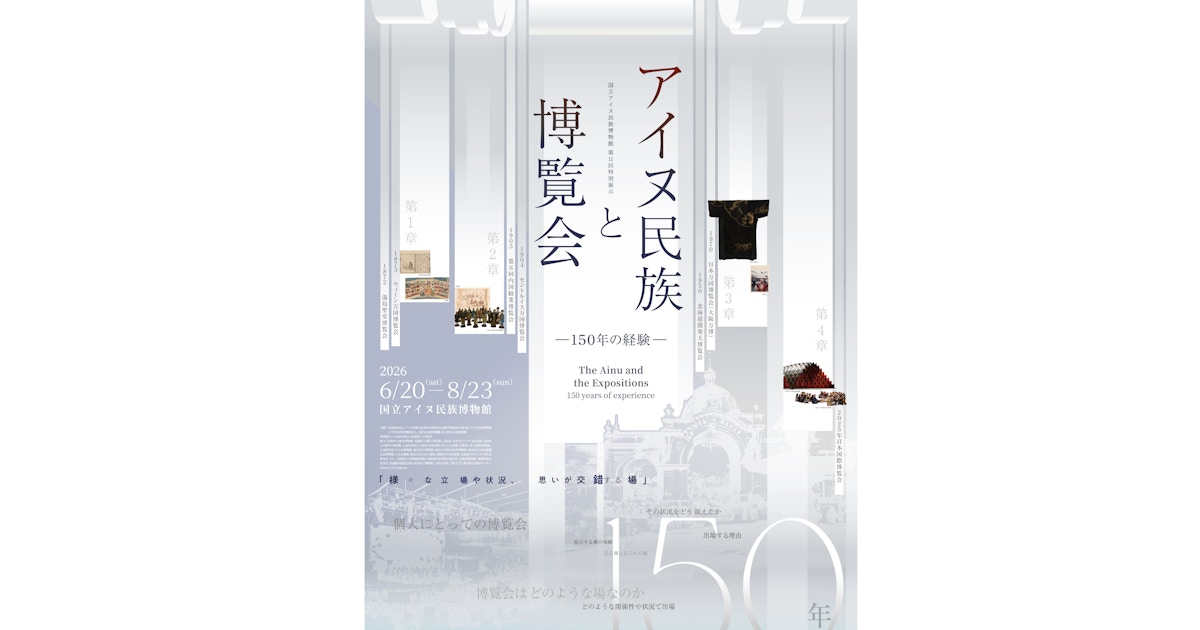
The 11th Special Exhibition at the National Ainu Museum and National Museum of Japanese History examines 150 years of Ainu participation in world's fairs, tracing their representation from the 1851 London Exposition onward. Through artifacts and historical research, the exhibition investigates how the Ainu people were displayed at international expositions that functioned as vehicles for imperialism and industrial development. It critically explores the complex dynamics between exhibitors, mediators, viewers, and the people being exhibited. The show offers a rare and unflinching perspective on cultural representation, colonial power, and the Ainu experience within the context of global modernity.
Who should go
This exhibition is ideal for visitors with an interest in indigenous studies, colonial history, and the politics of cultural representation — particularly those who want to move beyond surface-level introductions to Ainu culture. History enthusiasts, anthropology students, and museum-goers comfortable with critical academic frameworks will find the multifaceted approach rewarding. It is also well-suited to anyone curious about how international events like world's fairs shaped — and distorted — global perceptions of non-Western peoples. Come prepared to engage thoughtfully with difficult themes; this is not a light afternoon browse.
Good to know
This is a joint special exhibition held across two institutions — the National Ainu Museum (Upopoy, located in Shiraoi, Hokkaido) and the National Museum of Japanese History (located in Sakura, Chiba) — so confirm which venue you plan to visit before booking travel, as neither is in central Tokyo. Tickets are typically available at each venue's box office and through their official websites; foreign credit cards are generally accepted at national museum facilities in Japan. English-language materials or audio guides may be available — check the respective venue website ahead of your visit. Allow at least two hours to engage meaningfully with the exhibition's academically rich content.

This event was sourced and translated from Japanese by What's On Japan. Details may change — verify with the official source before attending.