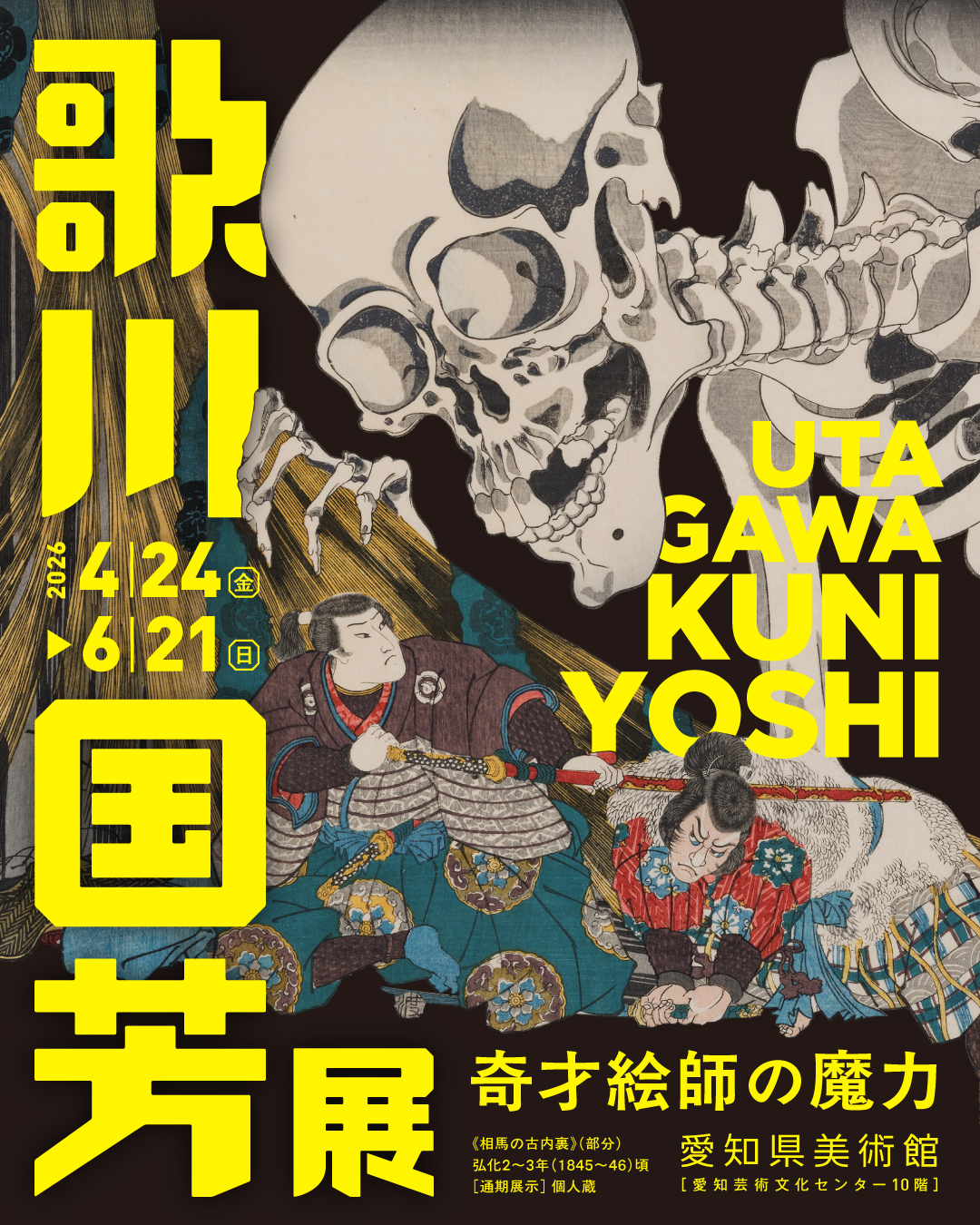
What this is
This major retrospective presents approximately 400 works by Utagawa Kuniyoshi (1797–1861), widely regarded as one of the last great masters of ukiyo-e — the traditional Japanese woodblock printing art form that defined visual culture during the Edo period. Kuniyoshi set himself apart from contemporaries through bold, dynamic compositions featuring legendary warriors, supernatural creatures, and sharp political satire disguised as playful caricature. The exhibition is organized into eight thematic sections covering actor prints, narrative scenes, landscapes, and hand-drawn paintings, offering a rare breadth of his output in a single venue. His willingness to push the boundaries of the genre — blending Western perspective techniques with Japanese aesthetics — earned him the reputation of an eccentric visionary. Held at the Aichi Prefectural Museum of Art in Nagoya, this is a significant opportunity to encounter one of ukiyo-e's most inventive and entertaining minds.
Who should go
Art lovers and anyone with an interest in traditional Japanese printmaking will find this retrospective deeply rewarding — 400 works is an exceptional scale for a single-artist ukiyo-e show. History enthusiasts curious about Edo-period culture, politics, and storytelling will appreciate the thematic depth across eight sections. Casual visitors who enjoy bold, visually striking imagery will be surprised by how contemporary and witty Kuniyoshi's work feels. Allow at least two to three hours to do the collection justice, and consider visiting on a weekday to avoid crowds.
Good to know
Tickets can be purchased at the museum box office or in advance through eplus.jp or pia.jp, both of which accept foreign credit cards; convenience store pickup at Lawson (combini) is the most reliable option for visitors without a Japanese delivery address. The Aichi Prefectural Museum of Art is located on the 10th floor of the Aichi Arts Center in central Sakae — the building also houses a concert hall and art library, making it easy to combine with other cultural activities. The museum is a seated-viewing, gallery-style space; bags larger than A4 are typically required to be stored in coin lockers available at the entrance. Photography policies vary by exhibition and loan agreements — check signage at each section, as some Kuniyoshi works on loan may be restricted. General admission also includes access to the permanent Collection Exhibition during the exhibition period, adding extra value to your ticket.
This event was sourced and translated from Japanese by What's On Japan. Details may change — verify with the official source before attending.