What this is
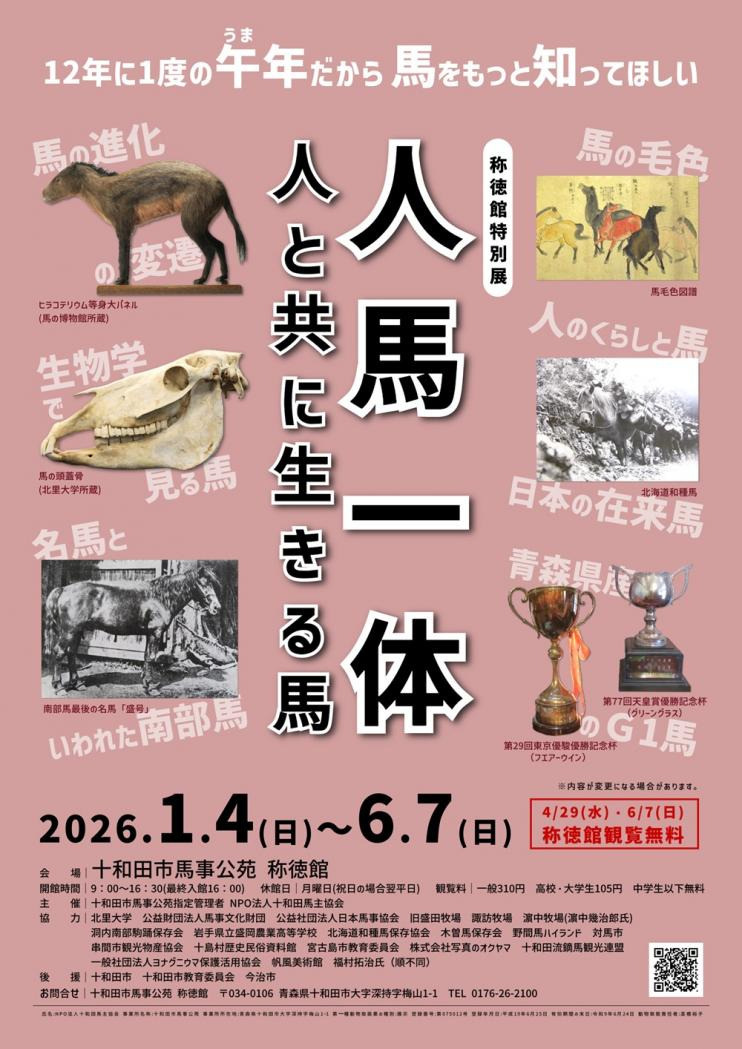
A special exhibition at the Sannai-Maruyama Site Museum in Aomori exploring the deep historical relationship between humans and horses across cultures and millennia. Timed to coincide with the Year of the Horse in the Chinese zodiac calendar, the exhibition examines how horses shaped human civilization through transportation, agriculture, warfare, and cultural practices. Drawing on archaeological evidence and historical artifacts, it traces the story of horse domestication, breeding traditions, and the animal's symbolic significance across various societies. This is a rare opportunity to engage with the human-horse partnership through an anthropological lens at one of Japan's most significant prehistoric sites.
Who should go
History enthusiasts, archaeology buffs, and families with children interested in cultural education will find this exhibition engaging and informative. The exhibition is particularly well-suited to visitors curious about how ancient civilizations evolved alongside domesticated animals, and those with an interest in comparative cultural history. The Sannai-Maruyama site itself is one of Japan's most celebrated Jomon-period archaeological sites, adding significant context and value to any visit. Arrive early in the day to allow ample time to explore both the exhibition and the broader archaeological site grounds.
Good to know
Admission is purchased at the venue; bring cash as smaller regional museums in Japan often do not accept foreign credit cards. The general admission price of ¥310 is very affordable, making this an easy add-on to a broader Aomori itinerary. The Towada City Equestrian Park (Komakko Land) Shotokukan is a regional facility, so English-language signage may be limited — consider downloading a translation app before visiting. January in Aomori means heavy snowfall and sub-zero temperatures, so dress in warm, waterproof layers and allow extra travel time for winter road conditions. Visiting on a weekday will ensure a quieter, more relaxed experience.
This event was sourced and translated from Japanese by What's On Japan. Details may change — verify with the official source before attending.