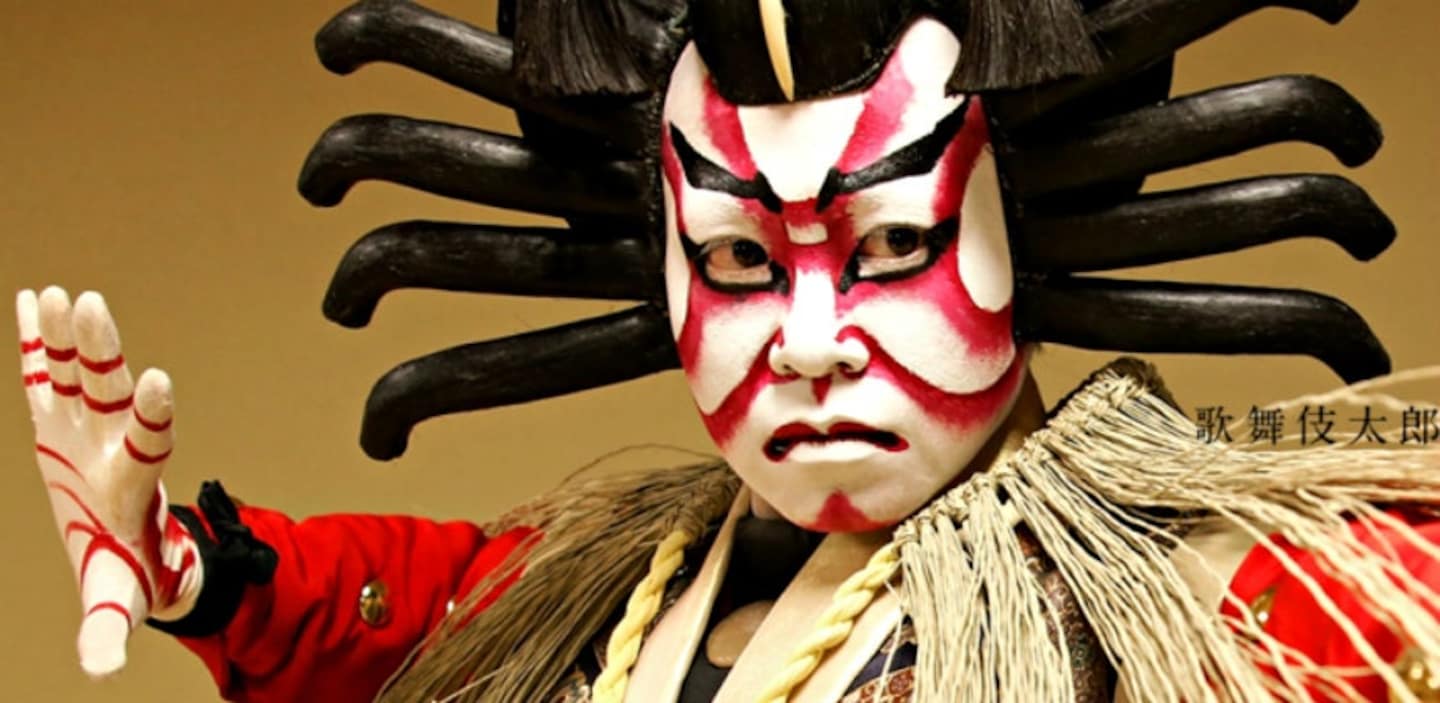
A First-Timer's Guide to Watching Kabuki in Japan
By What's On Japan Team
Kabuki is one of the most visually striking theatrical forms in the world and one of the least understood by foreign visitors. The combination of elaborate costume, stylised movement, sung dialogue, and a performance tradition stretching back four centuries can feel impenetrable from the outside. It is not. With a small amount of preparation, kabuki is immediately accessible — and often more gripping than theatre performed in your own language, precisely because you are forced to watch rather than listen.
This guide covers everything you need to attend a kabuki performance in Japan: the history, the theatres, the ticket system, how to follow along, what to expect, and how the art form is finding new audiences following the global success of Kokuho in 2025.
What Is Kabuki?
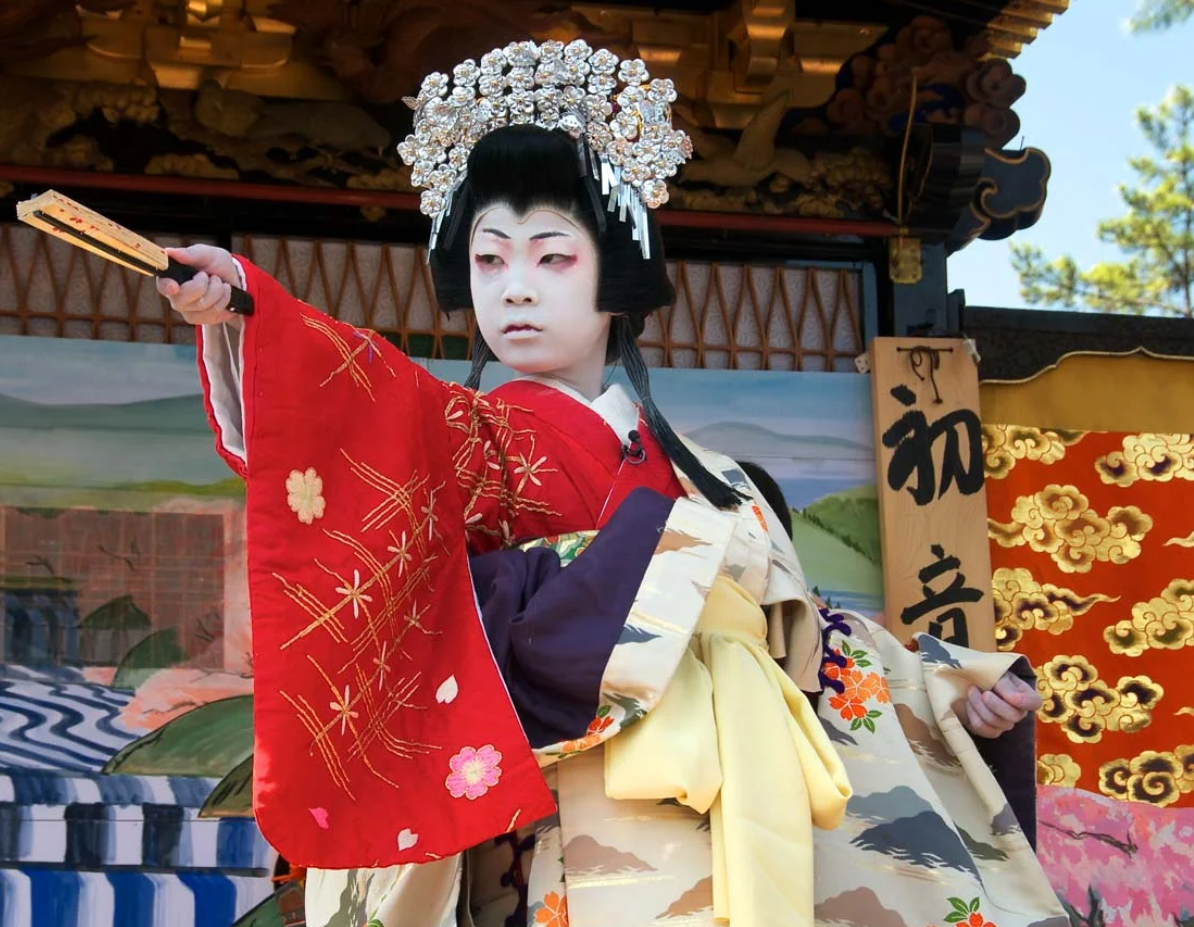
Kabuki is a classical Japanese theatrical form combining drama, dance, and music. It developed in Edo — present-day Tokyo — in the early seventeenth century and was designated a UNESCO Intangible Cultural Heritage in 2008.
The word is written with three characters: 歌 (ka, song), 舞 (bu, dance), and 伎 (ki, skill). In practice kabuki encompasses all three simultaneously. Performers move in highly codified ways, speak and sing in stylised vocal registers, and deploy technical skills that take decades to master.
All roles, including female characters, are played by male actors. The onnagata tradition — male actors who specialise in female roles — is central to kabuki and produces some of its most celebrated performances. The artifice is not concealed. The wigs, the white makeup, the heightened movement: everything declares itself as theatre. This is not realism. It is the opposite of realism, and understanding that distinction is the key to appreciating what you are watching.
A Brief History of Kabuki
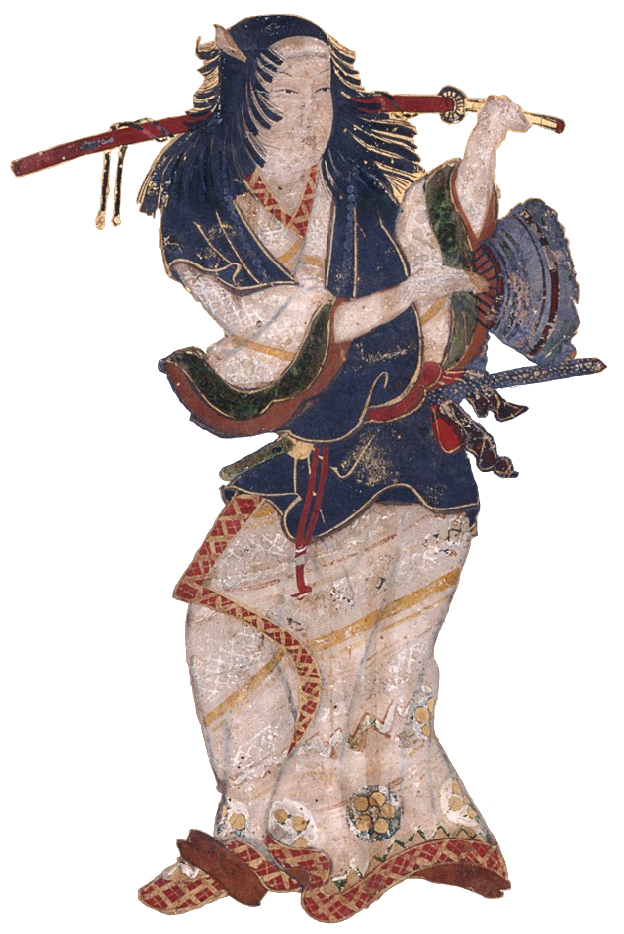
Kabuki was founded by a woman. Izumo no Okuni, a shrine maiden from Izumo Grand Shrine, began performing a new style of dance-drama in the dry riverbed of the Kamo River in Kyoto around 1603. Her performances were popular, scandalous by the standards of the era, and quickly imitated. The early form featured female performers and associations with prostitution that the Tokugawa shogunate found threatening enough to ban women from the stage entirely in 1629.
The ban produced the onnagata tradition. Male actors took female roles and developed the performance vocabulary that defines kabuki today. Young men were subsequently also banned from performing female roles after similar concerns arose, leaving only adult male performers — a restriction that, far from diminishing the form, pushed it toward the sophisticated stylisation that became its defining characteristic.
Through the Edo period kabuki was the popular theatre of the merchant class — the equivalent of cinema in terms of its cultural reach and social function. Stars became celebrities whose images appeared on woodblock prints sold throughout the city. Plays were written around specific actors' strengths. Stages developed increasingly elaborate machinery: trap doors, revolving platforms, the hanamichi runway that extends through the audience allowing actors to enter and exit through the crowd. By the eighteenth century kabuki was the most technically sophisticated popular theatre in the world.
The Meiji Restoration in 1868 brought Western influence and an existential question about whether kabuki was refined enough for the modern nation Japan wished to present internationally. The kigeki movement attempted to elevate it toward Western realism. It largely failed. The classical repertoire survived and remains the core of what audiences see today. The machinery, the makeup traditions, the vocal styles, the codified movement — all of it continuous from the Edo period.
Kabuki families are central to understanding how the art form perpetuates itself. Unlike Western theatre, where talent is the primary currency of advancement, kabuki operates through inherited names. A son or adopted student of a major actor inherits the stage name along with the roles associated with it. The name Ichikawa Danjuro, for instance, has been held by thirteen actors over four centuries, each inheriting a specific repertoire and a specific set of audience expectations. This system produces extraordinary depth of tradition and significant barriers to those born outside it — a tension that Kokuho examines directly.
Kabuki and Film: Kokuho and the Art Form's Moment
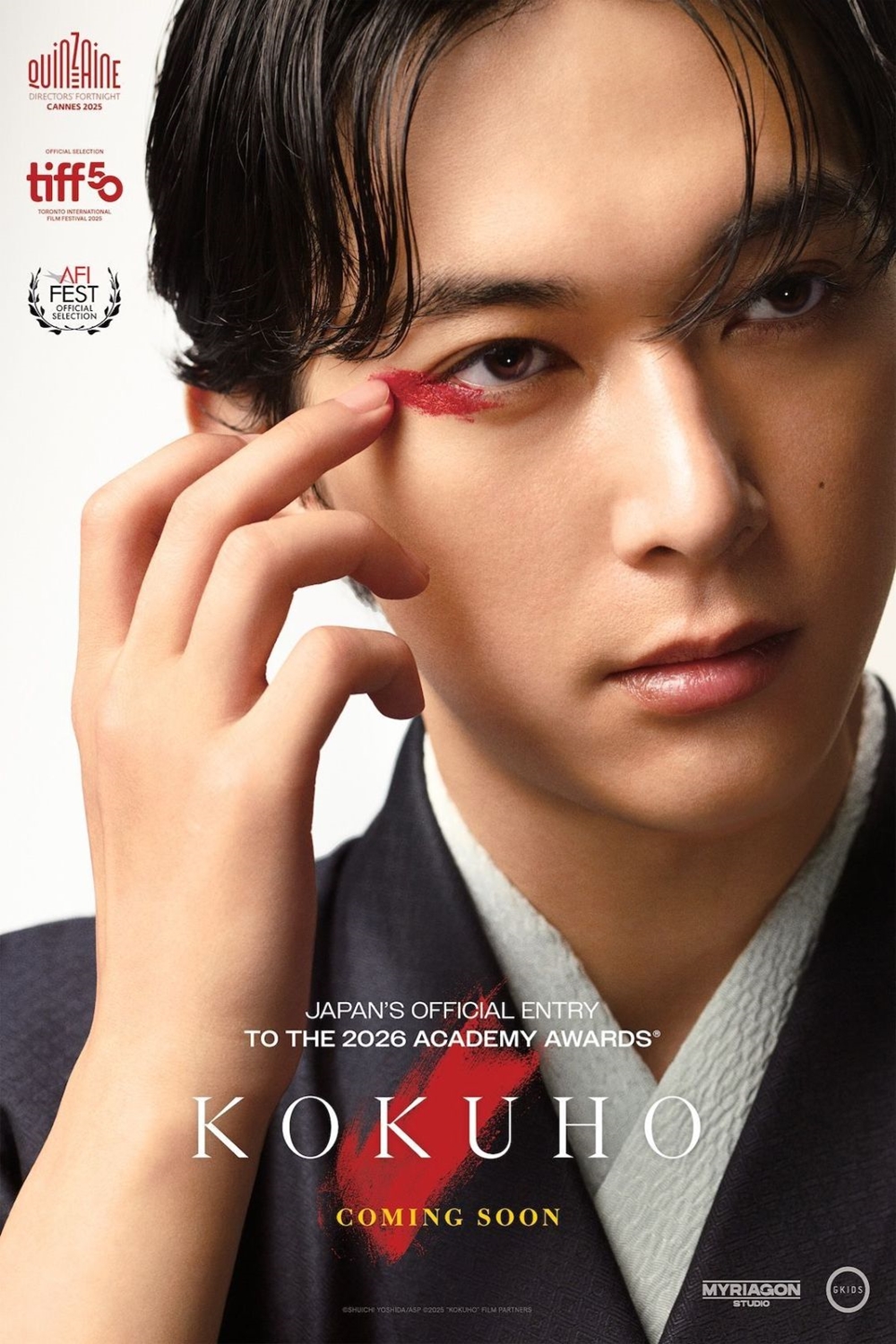
In 2025 kabuki became the subject of the most commercially successful Japanese live-action film ever made. Kokuho had its world premiere in the Directors' Fortnight section of the 78th Cannes Film Festival in May 2025 before opening in Japan on 6 June, distributed by Toho. It went on to gross $128 million domestically, breaking records that had stood for decades and becoming the all-time highest-grossing Japanese live-action film.
The film was nominated for Best Makeup and Hairstyling at the 98th Academy Awards — a recognition that pointed directly at one of kabuki's most demanding crafts — and was selected as Japan's entry for Best International Feature Film, reaching the December shortlist. Critics praised the acting, direction, and cinematography alongside the hairstyling and makeup work, which in kabuki is itself a performance art requiring years of specialist training.
Kokuho is a narrative film that uses the kabuki world as its setting and subject. It examines the hierarchies of the kabuki family system, the inheritance of names, and the gap between those born into kabuki lineages and those who arrive as outsiders with talent but without the family connections that determine access to major roles. It is neither a celebration nor a condemnation — it is an honest portrait of what it means to carry a living tradition across generations, with all the beauty and rigidity that entails.
For international audiences Kokuho functions as both an introduction to kabuki and an examination of its social structures. For those who have seen it before arriving in Japan, a live performance at the Kabuki-za will reframe everything. The gestures you watched onscreen, the vocal styles, the physical discipline required to hold a mie pose, the particular quality of attention demanded by the hanamichi entrance — all of it lands differently when you are in the same room as the performer. The film is an excellent reason to attend. It is not a substitute for attendance.
The Major Kabuki Theatres in Japan
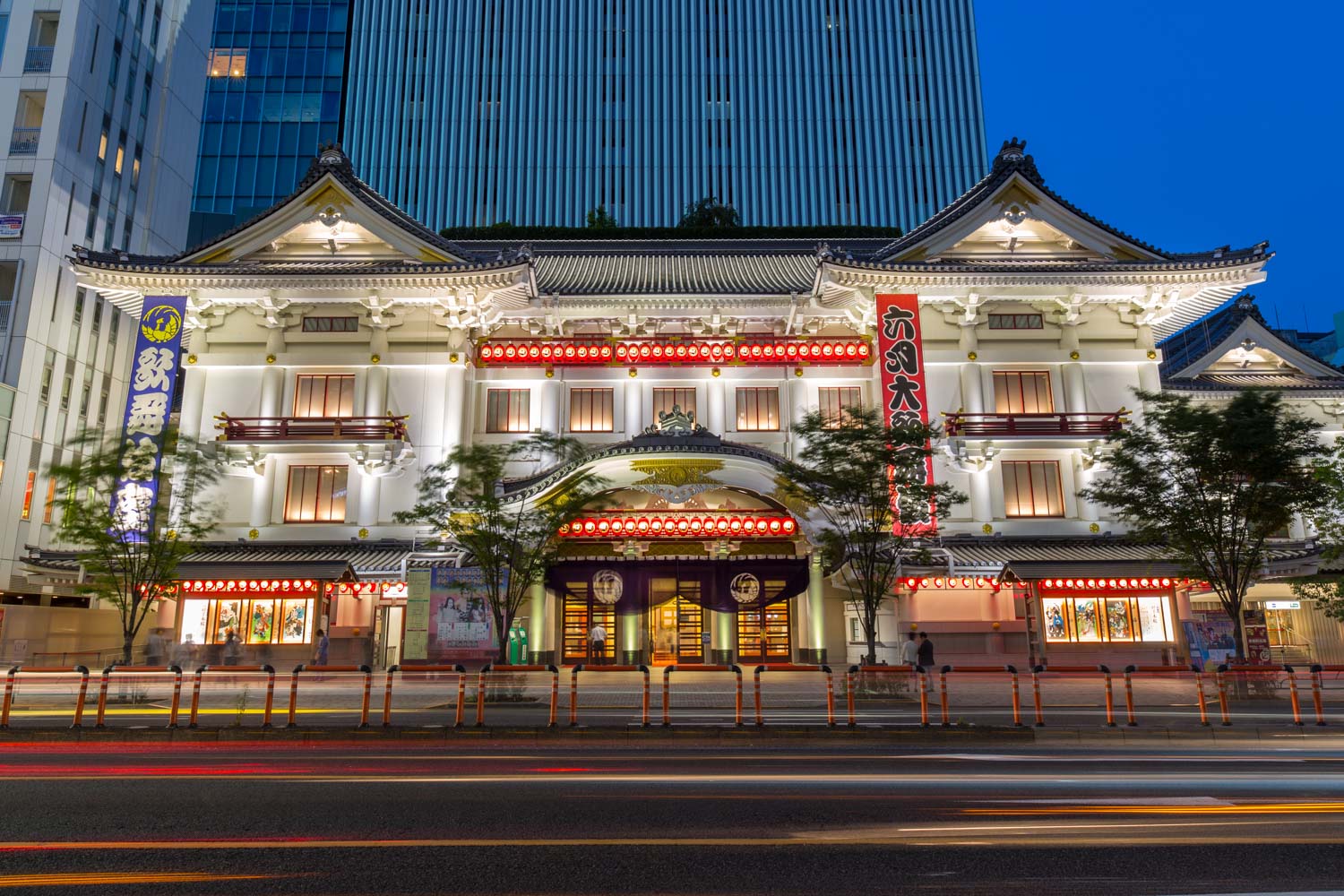
Kabuki-za, Tokyo
The Kabuki-za in Ginza is the primary home of kabuki in Japan. The current building, the fifth structure on the same site in Higashi-Ginza, opened in 2013 and seats approximately 1,800 people across three levels. It runs kabuki performances on almost every day of the year, typically offering a morning programme beginning around 11am and an evening programme beginning around 4:30pm, with each running three to four hours including intervals.
The building was designed by architect Kengo Kuma, who preserved the traditional Japanese roofline of previous Kabuki-za buildings while integrating a modern tower behind it. The interior combines contemporary amenities with traditional theatre design. The Kabuki-za Tower above the theatre contains the fifth-floor Kabuki-za Gallery, accessible without a performance ticket, which displays costumes, props, wigs, and documentation spanning the theatre's history.
The Kabuki-za is in Higashi-Ginza, directly above Higashi-Ginza Station on the Toei Asakusa Line and Hibiya Line. Exit 3 emerges directly into the theatre building.
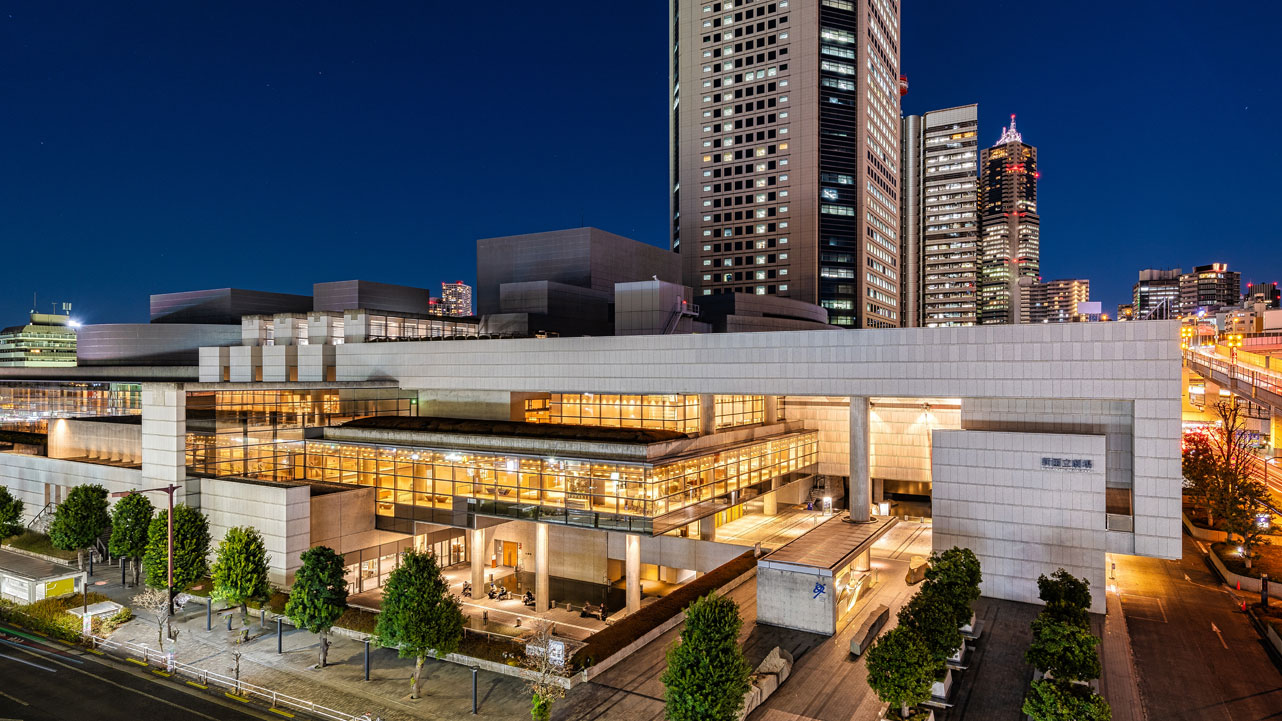
National Theatre, Tokyo
The National Theatre in Hanzomon, operated by the Japan Arts Council, hosts kabuki as part of a broader programme of traditional performing arts. It tends toward longer, more complete productions of classic plays rather than the highlights format common at the Kabuki-za — better for understanding narrative structure, though the Kabuki-za typically has stronger production values and casting.
The National Theatre closed for renovation in 2023 and its reopening, originally scheduled for 2029, should be confirmed before making plans around it.
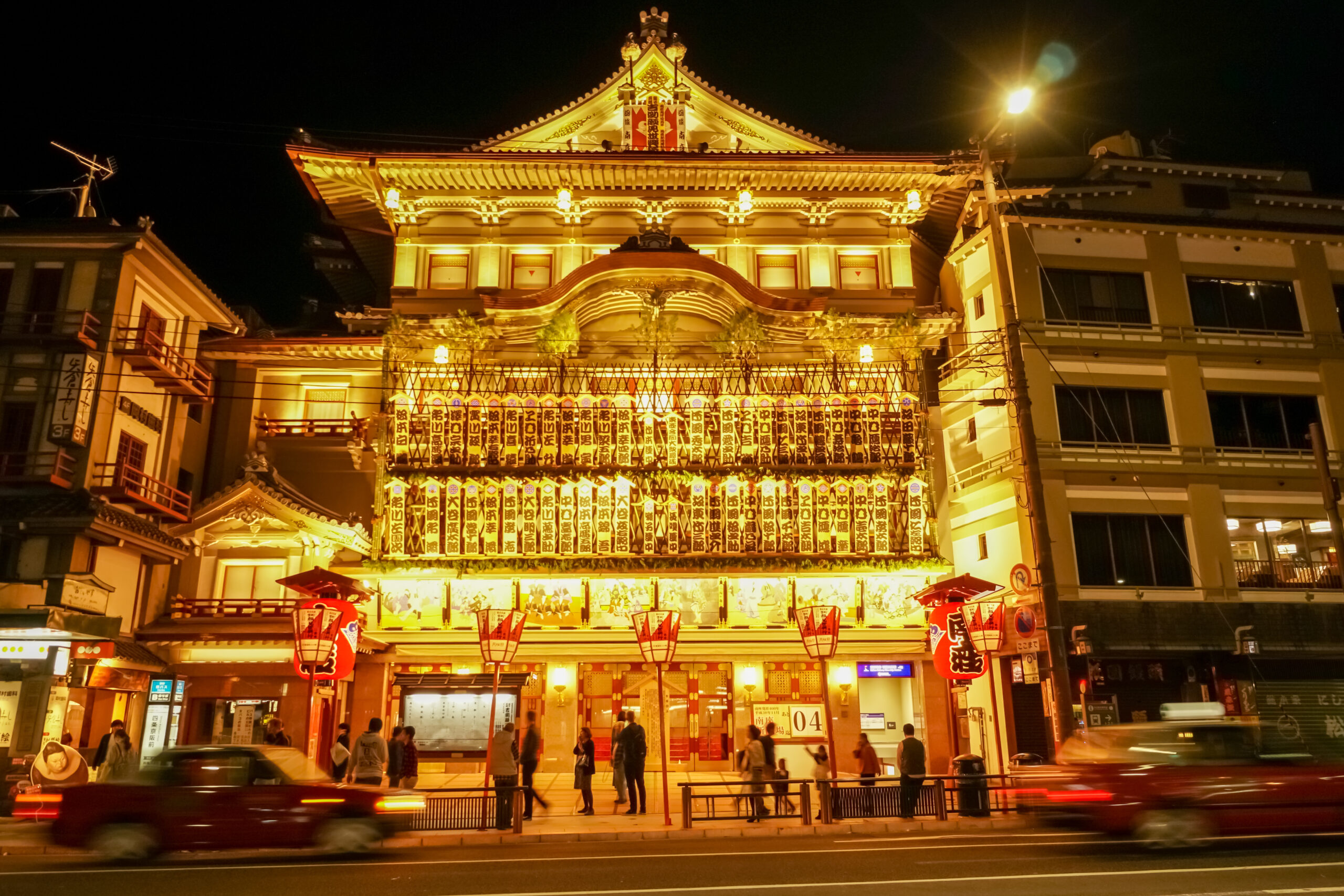
Minami-za, Kyoto
The Minami-za in Gion is the oldest kabuki theatre in Japan, with documented performance history on the same site in the Shijo-Kawara district dating to the early seventeenth century — Okuni herself performed nearby. The current building dates to 1929 and was designated an Important Cultural Property in 1996.
The Minami-za hosts the Kaomise performance each December — kaomise means face-showing, and the performance is the occasion when the season's roster of stars is presented to Kyoto audiences. Major actors from Tokyo travel to Kyoto for Kaomise, making it the single most prestigious kabuki event of the year outside the Kabuki-za's own flagship programmes. Tickets for Kaomise are among the most sought-after in Japanese theatre and should be pursued months in advance through the Shochiku website.
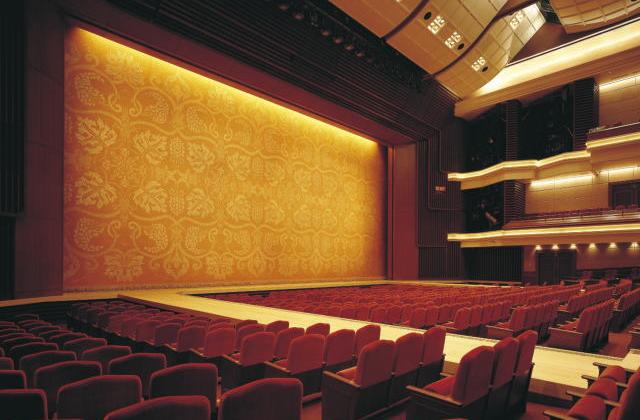
Hakataza, Fukuoka
The Hakataza in central Fukuoka hosts regular kabuki programmes throughout the year. For visitors in Kyushu it is the practical choice and considerably easier to attend than the Tokyo theatres during peak periods.
Shochiku-za, Osaka
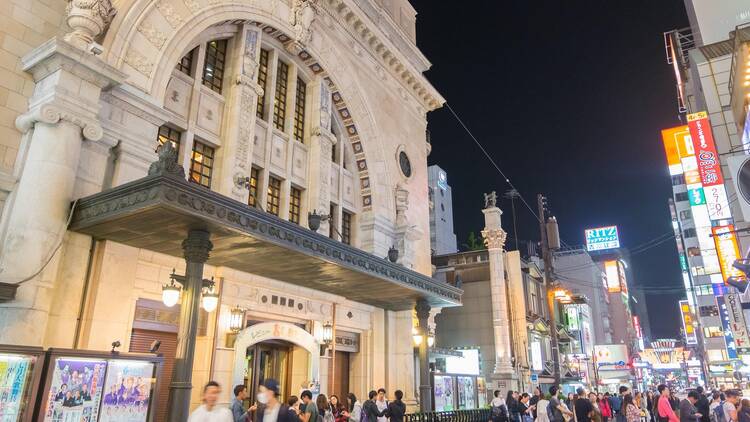
The Shochiku-za in Osaka's Dotonbori district hosts kabuki several times annually. Osaka has its own distinct kabuki tradition — Kamigata kabuki — which differs from the Edo style primarily in its emphasis on domestic realism and psychological nuance over heroic spectacle. The Osaka tradition produced wagoto, a gentle, romantic male performance style that contrasts sharply with the bombastic aragoto style developed in Edo. This theatre is holding its last performance in May 2026 although the theatre may be rebuilt.
How Kabuki Programmes Are Structured
A full kabuki programme consists of several independent pieces rather than a single continuous narrative. A morning session at the Kabuki-za might include a dance piece, a domestic drama, and a scene from a historical play — each complete in itself and each showcasing different performance styles. This anthology structure means that even within a single programme the range of what kabuki can be is on display.
Understanding the main programme types helps orient your experience:
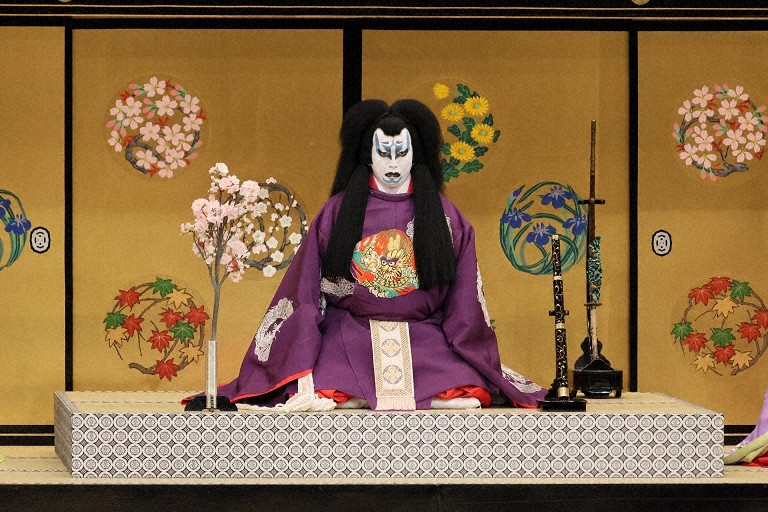
Jidaimono (period pieces) are set in historical periods before the Edo era, typically dealing with samurai, lords, and historical events. They tend toward formality, grandeur, and aragoto performance styles.
Sewamono (contemporary pieces) were set in the contemporary world of Edo-period urban life — merchants, geisha, criminals, domestic conflict. They are often more emotionally accessible to modern audiences because the human situations they depict are recognisable.
Shosagoto (dance pieces) prioritise movement and music over narrative. They are frequently the most immediately beautiful pieces in a programme for first-time viewers, because the aesthetic pleasure does not depend on following a plot.
The Single-Act Ticket: The Correct Entry Point for First-Time Visitors
The Kabuki-za sells single-act tickets (一幕見席, hitomakumi-seki) for specific pieces within a programme, available on the day from the fourth-floor box office. These cost between approximately ¥500 and ¥2,000 depending on the length and popularity of the piece, last between thirty minutes and ninety minutes, and are the correct introduction for anyone attending kabuki for the first time.
Single-act seating is in the upper fourth-floor gallery — the view is restricted but adequate, and standing positions at the rear are also available. Tickets sell out for popular pieces and for programmes featuring major stars. Arriving forty minutes before the piece begins is advisable. The box office opens approximately thirty minutes before each act.
Single-act tickets are cash only at most venues.
How to Follow a Kabuki Performance
Earphone guides are available for rent at the Kabuki-za and most major theatres, typically for around ¥700 plus a deposit. These provide English-language commentary explaining the plot, the actors, the staging conventions, and the history of each piece as it unfolds. They are not simultaneous translation — they are contextual explanation delivered at intervals between and during the dialogue, timed to the performance. For first-time visitors they are transformative. Rent one without hesitation.
The dialogue is delivered in an archaic form of Japanese — largely based on Edo-period speech — that contemporary Japanese audiences also find difficult to follow without preparation. You are not at a meaningful disadvantage for not understanding Japanese. What matters most in kabuki is what you can see: the movement, the costume, the expression, the spatial relationship between performers, and the highly charged moments when an actor holds a mie pose or delivers a stylised vocal passage.
The mie is the frozen pose held at moments of peak dramatic intensity — the actor crosses his eyes, adopts a fixed stance, and holds it while the audience responds. It is the most famous gesture in kabuki and the one most frequently reproduced in woodblock prints. When you see one, you will know it.
Audience participation is traditional and encouraged. Japanese audiences shout the house names (ya-go) of their favourite actors at climactic moments — you will hear "Naritaya!" called for the Ichikawa Danjuro line, "Otowaya!" for the Onoe Kikugoro line, and others depending on who is performing. The shouts (kakegoe) are timed to specific moments and represent a form of informed appreciation. First-time visitors are welcome to participate if they know the correct house name for the actor on stage.
What to read before attending: The Kabuki-za website has English programme notes. The Earphone Guide company publishes English summaries of current programmes on its website (ear-g.co.jp). The book Kabuki: The Popular Theater by Masakatsu Gunji, though older, remains the most thorough English-language introduction to the form.
What to Watch: Key Plays and Moments
Shibaraku is the most celebrated example of aragoto — the bombastic, supernatural performance style developed in Edo. The lead actor enters via the hanamichi runway through the audience in a costume of such extreme dimensions — the shoulders extend more than a metre on each side — that movement requires physical assistance. The entrance alone, traditionally announced in advance so the audience can anticipate it, is one of the great theatrical experiences in Japanese culture.
Chushingura — the dramatisation of the forty-seven ronin vendetta of 1703 — is kabuki's most performed play. A samurai lord is forced to commit ritual suicide after being provoked into drawing his sword in the shogun's palace; his retainers become masterless (ronin) and spend two years planning and executing revenge on the official who engineered his death. The story resonates in Japanese culture the way Hamlet resonates in English-speaking countries. Full productions run an entire day. Excerpts appear on most major programmes throughout the year.
Benten Kozo features one of kabuki's most famous scenes: a character who has been passing as a woman is exposed, and in a slow, deliberate sequence removes the wig to reveal the man beneath. The transformation is simultaneous comedy, eroticism, and virtuoso technique. The speech that follows — the character's self-introduction — is one of the most quoted passages in the Japanese theatrical canon.
Musume Dojoji is the defining onnagata dance piece. Based on a Buddhist legend, it follows a woman whose obsessive love for a monk transforms into supernatural fury — a transformation expressed entirely through increasingly intense dance, with the performer's costume changing mid-performance as the character moves from woman to demon. If there is a single piece that demonstrates the full range of what kabuki can achieve in a single performance, this is it.
Yoshitsune Senbon Zakura (Yoshitsune and the Thousand Cherry Trees) is among the most spectacular of the jidaimono plays, featuring fox spirits, shape-shifting, and one of kabuki's most beloved animal roles. The supernatural elements are played entirely straight, which in kabuki's heightened theatrical world produces something genuinely moving.
Kabuki Tickets: How to Buy Them
Full programme tickets for the Kabuki-za are available through the Shochiku website (shochiku.co.jp), Ticket Pia, CN Playguide, and the theatre box office. Prices range from approximately ¥4,000 for upper gallery seats to ¥20,000 or more for premium first-floor positions with full sightlines of the hanamichi.
For non-Japanese speakers, the Shochiku English website allows international purchases with overseas credit cards and provides English programme information. Google Translate functions adequately on the Japanese ticketing platforms for those comfortable navigating them.
Walk-in tickets for unsold seats are available at the box office on the day of performance. Popular programmes and specific star appearances sell out weeks in advance. Less prominent programmes often have availability on the day, particularly for upper gallery positions.
For the Minami-za Kaomise in December: tickets are released through a priority booking system for Shochiku members, with remaining tickets going on general sale. International visitors can attempt to purchase through agencies but availability is genuinely limited.
When to Go: The Kabuki Calendar
January — Hatsuharu Kabuki at the Kabuki-za. The New Year programme traditionally features the strongest available casts and sets the tone for the year. Ichikawa Danjuro XIII has made the January programme a centrepiece of his year since assuming the name.
March — The spring programme at the Kabuki-za typically includes Shibaraku and other aragoto pieces.
April — Kichirei Kaomise at the Kabuki-za. The second major face-showing event of the year.
August — The summer programme tends toward ghost plays (kaidan-mono) — kabuki has an extensive repertoire of supernatural horror appropriate to the Japanese cultural tradition of telling ghost stories in summer.
November — The autumn programme at the Kabuki-za is among the most prestigious of the year.
December — Kaomise at the Minami-za in Kyoto. The theatrical highlight of the Kansai year.
Practical Information
Intervals at the Kabuki-za last thirty to forty minutes and are intended for eating. The theatre sells makunouchi bento (幕の内弁当) — the name literally translates as between-acts bento, and the format originated in kabuki culture. They can be ordered in advance through the theatre and collected at the interval. Eating in your seat during the interval is not only acceptable but the correct and traditional thing to do.
Photography is prohibited inside the auditorium during performances. Photography in lobbies and common areas is generally permitted. The fifth-floor gallery welcomes photography.
Dress code: There is none. Japanese audiences range from formal kimono to casual weekend clothing. The theatres are air-conditioned aggressively in summer — bring a layer regardless of outdoor temperature.
Duration: A full morning or evening programme runs three to four hours including intervals. Single acts run thirty to ninety minutes. Factor this into your day — kabuki rewards unhurried attendance.
Language: The Kabuki-za website has a comprehensive English section. Staff at the ticket windows in major theatres typically have functional English for basic transactions.
Beyond the Major Theatres: Sato Kabuki
Kabuki is not only performed in purpose-built metropolitan theatres. Across Japan, particularly in rural communities in Nagano, Gifu, and Shikoku, local performance traditions known as sato kabuki (village kabuki) have continued for centuries, maintained by non-professional performers who learn the repertoire across generations within their communities.
These performances predate the professionalisation of kabuki and in some respects preserve forms that the metropolitan tradition has lost. The stage in Ogi on Sado Island and the performances in the Ina Valley in Nagano Prefecture are among the most documented, but there are dozens of communities across Japan where local kabuki continues as a living community practice rather than a preserved art.
Sato kabuki performances are announced locally and rarely appear on English-language event sites. They represent kabuki before it became a metropolitan institution — more communal, more directly connected to the communities that sustain it, and in some ways more illuminating about why the form survived as long as it has.
Find events happening near you
Browse hundreds of events across Japan — translated from Japanese, updated regularly.
Browse Events