 © Adrian Cox
Japan's Hidden Festival Calendar: Events You've Never Heard Of
By What's On Japan Team
Japan hosts an extraordinary number of festivals. Estimates suggest around 200,000 matsuri take place across the country every year — one for almost every day, in almost every town. The ones that appear in every travel guide represent a tiny fraction of what actually happens. Here are some that deserve more attention.
The Sagicho Festival, Omi-Hachiman — March
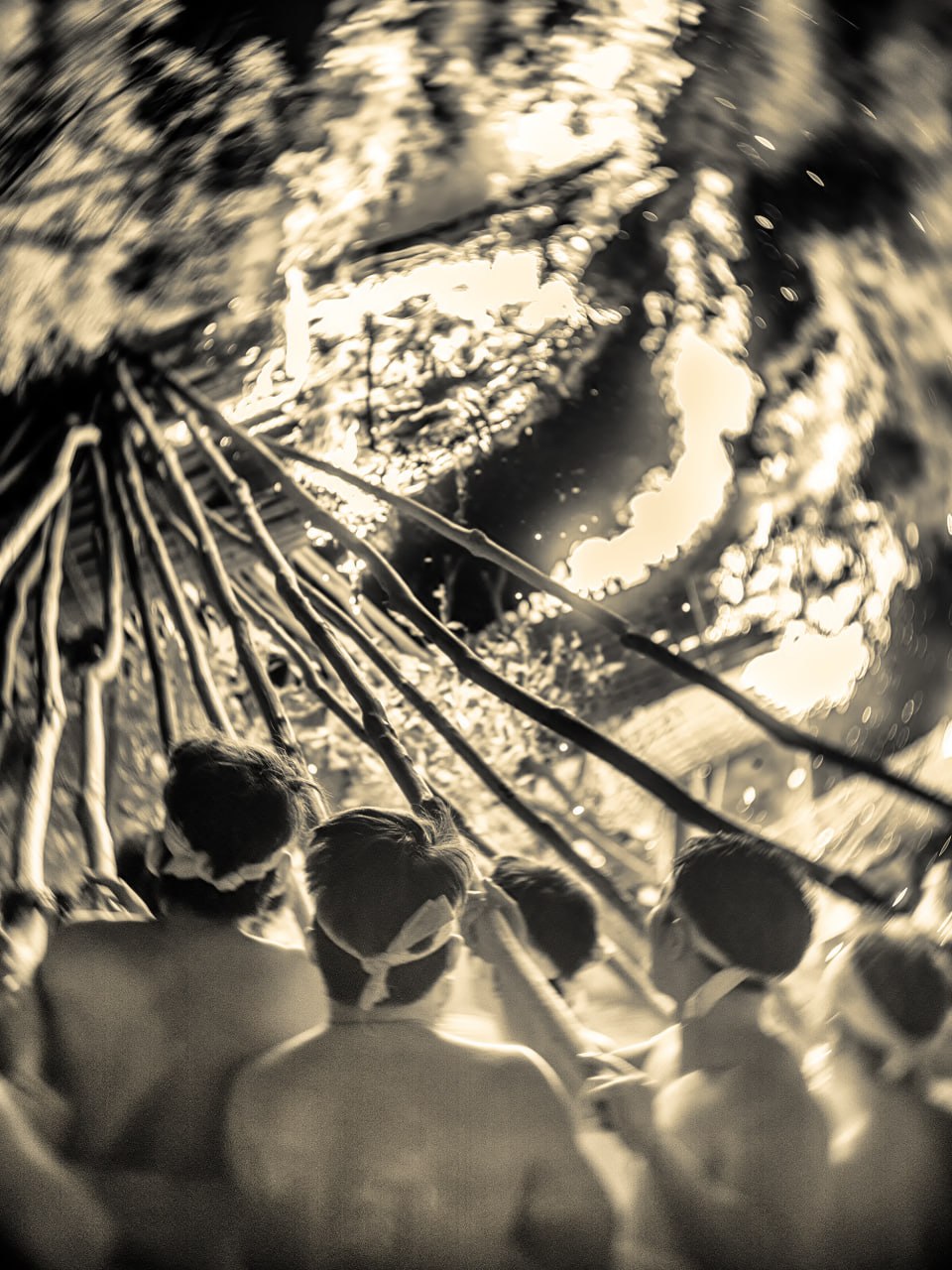
The Sagicho Festival in Omi-Hachiman, Shiga Prefecture, boasts a 400-year history and is designated an Intangible Folk Cultural Property. It features around 15 floats that compete against one another — and are then set on fire. This is not a metaphor. The floats, elaborately decorated and built over weeks, are burned as an offering at the end of the festival. It is one of the most visually dramatic events in the Kansai region and attracts almost no foreign visitors. Omi-Hachiman is less than an hour from Kyoto by train.
The First Day of the Horse Festival, Izushi Castle Town — March
At Arikoyama Inari Jinja in Toyooka, Hyogo Prefecture, the Hatsu-uma festival has been celebrated for over 400 years. During the three-day festival in mid-March, local children dress as fox shrine maidens and form a procession down Mt. Ariko, praying for prosperity throughout the year. There is also a fox dance at a local theater, over 300 vendor stalls, and a haunted house. In the days of the samurai, this was the only day ordinary citizens could enter the shrine grounds. Today almost no tourists know it exists.
The Takayama Spring Festival — April 14 and 15
The Takayama Festival in Gifu Prefecture, with a history of around 740 years, is considered one of the three most beautiful festivals in Japan. Ornate wooden floats are elaborately made into small houses embellished with decorations and lanterns, and during the parade, karakuri marionettes perform while young performers play traditional folk tunes. Takayama sits in the Japanese Alps and the old town is one of the best-preserved Edo-period streetscapes in the country. Unlike Kyoto, it remains manageable even during festival season.
The Nakizumo Festival — Spring, Sensoji Temple Tokyo
At Sensoji Temple in Tokyo, local parents bring their infants to participate in a crying contest. This centuries-old tradition is said to originate from the saying "Naku ko wa sodatsu" — crying babies grow fast. Parents hand their babies to sumo wrestlers who try to make them cry, and the baby who cries fastest, longest, and loudest is declared the winner. It sounds alarming. In practice it is one of the most warmly human events you will witness anywhere in Japan — the babies are perfectly safe and everyone, including the sumo wrestlers, is laughing.
The Arita Ceramics Fair — Golden Week, Saga Prefecture
The Arita Ceramics Fair takes place over the Golden Week holiday in Arita, Saga Prefecture. Over 450 vendors line a 2.5-mile route, selling everything from affordable everyday porcelain to high-end artistic pieces, attracting over 850,000 visitors annually. Arita has been producing porcelain since the early 17th century and is considered the birthplace of Japanese ceramics. The fair is enormous, well-organised, and almost entirely unknown outside Japan.
The point of this list is not that these festivals are better than Gion Matsuri or the Sapporo Snow Festival. It is that Japan's festival culture runs so deep that even a lifetime of visiting would not exhaust it. Use our events calendar to find what is happening near you — the smaller, stranger, and more local the event, the more likely you are to be the only foreigner there, which is often exactly the point.
Find events happening near you
Browse hundreds of events across Japan — translated from Japanese, updated regularly.
Browse Events