The Sumo Calendar: How to Watch Grand Sumo in Japan, Get Tickets, and Understand What You're Seeing
By Adrian
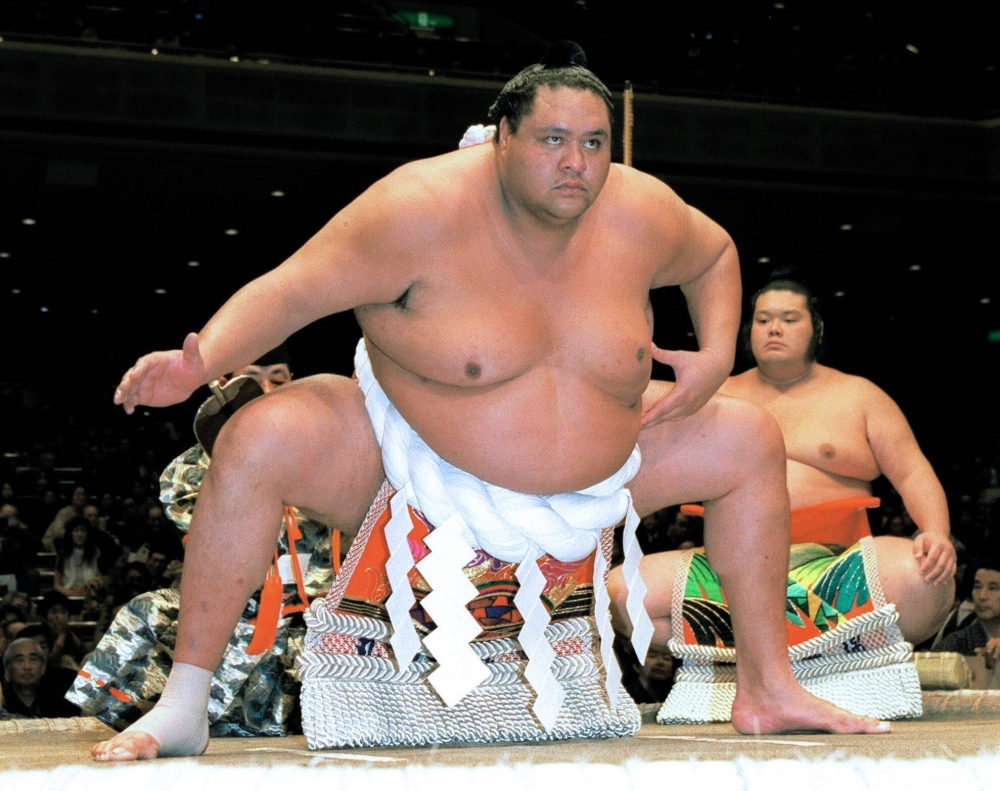
Sumo is one of the few sports in the world where the rituals surrounding the competition are as compelling as the competition itself. A grand sumo tournament combines ancient Shinto ceremony, extreme physical conditioning, a ranking system of Byzantine complexity, and — in 2026 — one of the most compelling storylines in international sport: a 21-year-old Ukrainian refugee on the verge of becoming the first European to reach sumo's highest rank. There has never been a better time to attend.
This guide covers everything a first-time visitor needs to attend a grand sumo tournament in Japan: the history, the ranking system, how training works, the six annual tournament schedule with venues and ticket information, and what you are actually watching when two men the size of small cars attempt to remove each other from a circle of clay.
A Brief History of Sumo
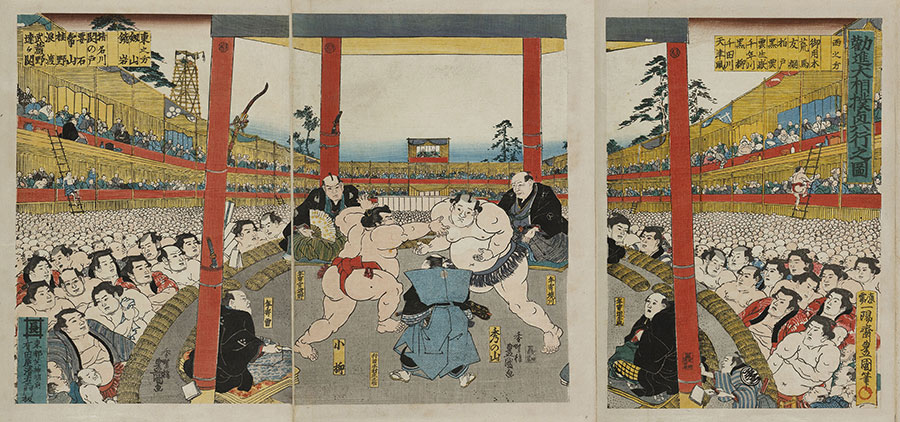
Sumo's origins are religious rather than sporting. The earliest records of sumo describe ritual bouts performed at Shinto shrines to entertain the gods and divine the fortunes of the harvest. The sport appears in the Kojiki, Japan's oldest chronicle, compiled in 712 CE, where the outcome of a sumo match is described as determining which clan would rule the Japanese islands. Whether this is history or mythology is beside the point — it establishes sumo as something embedded in Japanese cosmology from its earliest recorded moment.
The professional sumo we watch today took shape in the Edo period. Organised tournaments began in Osaka in the early eighteenth century and in Edo (present-day Tokyo) shortly after, initially held in temple grounds as fundraising events. The sport gradually developed the structures that persist today: the ranking system, the stable system for training and living, the ceremonial elements drawn from Shinto practice, and the distinctive aesthetic of the dohyo — the ring — as a sacred space.
The modern professional structure was established in 1925 with the founding of the Japan Sumo Association (JSA), which unified the previously separate Osaka and Tokyo organisations and standardised the six-tournament annual calendar in its current form in 1958.
How the Ranking System Works
Before attending sumo, understanding the ranking system transforms the experience from watching large men collide into following a sport with genuine stakes and narrative.
Every wrestler in professional sumo is ranked on the banzuke — a hierarchical document, traditionally hand-brushed in calligraphic script, released approximately three weeks before each tournament. The banzuke lists every professional wrestler in descending order of rank, with the most senior wrestlers at the top in the smallest, most compressed script, and the lowest-ranked wrestlers at the bottom in larger text.
The six professional divisions, from highest to lowest, are: Makuuchi, Juryo, Makushita, Sandanme, Jonidan, and Jonokuchi. The vast majority of what is broadcast and attended in person is the top Makuuchi division, whose wrestlers are called rikishi.
Within Makuuchi, the ranks from top to bottom are:
Yokozuna — the Grand Champion. The highest rank in sumo, and unlike all others, it cannot be lost. A yokozuna who performs poorly cannot be demoted; they are expected to retire when their performance no longer befits the dignity of the rank. The yokozuna designation was not officially recognised as sumo's highest rank until 1909, and only 75 wrestlers have ever held it in the sport's entire recorded history. Promotion requires winning two consecutive tournaments — or an equivalent performance — as an ozeki. The rarity of the rank is partly what makes it meaningful.
Ozeki — the Champion rank, immediately below yokozuna. A wrestler at sekiwake will be considered for promotion to ozeki if they achieve a total of at least 33 wins over three consecutive tournaments, including ten or more wins in the most recent tournament. Unlike yokozuna, ozeki can be demoted — a wrestler who falls below eight wins in two consecutive tournaments drops to sekiwake, and must win ten or more in the following tournament to return.
Sekiwake and Komusubi — the two ranks below ozeki, collectively known as the san'yaku together with ozeki. These wrestlers face the most difficult schedules and the most prestigious opponents.
Maegashira — the rank-and-file wrestlers of the top division, numbered from 1 downward. A Maegashira 1 wrestler faces the san'yaku regularly; a Maegashira 16 wrestler faces less demanding opponents. Moving up or down the maegashira rankings happens entirely based on wins and losses in each tournament.
The banzuke lists wrestlers on both an East side and a West side — East being marginally more prestigious — so you will see rankings like Yokozuna 1 East, Ozeki 2 West, and so on.
A wrestler who achieves eight or more wins in a 15-day tournament achieves kachi-koshi — a winning record — and will rise in the rankings. Seven wins or fewer is make-koshi — a losing record — and results in a fall. At the top of the sport, the difference between promotion and demotion can come down to a single bout on the final day.
The Six Annual Tournaments
Every year, the Japan Sumo Association hosts six Grand Sumo Tournaments (honbasho), each lasting 15 days. The schedule is fixed and does not change year to year:
January — Hatsu Basho (New Year Tournament) Ryogoku Kokugikan, Tokyo January 11–25, 2026
The first tournament of the year, traditionally featuring the strongest fields and the most ceremonially charged atmosphere. The Emperor's attendance — tenran-zumo — occurs periodically at the January tournament and is considered one of the most significant events in the sumo calendar. In 2026, Emperor Naruhito attended on Day 8 (January 18), the first imperial attendance at sumo in six years.
March — Haru Basho (Spring Tournament) Edion Arena Osaka, Osaka March 8–22, 2026
The only major tournament held outside Tokyo in the first half of the year. Osaka's sumo culture is distinct — the crowd is louder, more vocal, and considered by many regulars to be the most passionate of the four cities.
May — Natsu Basho (Summer Tournament) Ryogoku Kokugikan, Tokyo May 10–24, 2026
The second Tokyo tournament of the year. Tickets for May 2026 sold out quickly following the dramatic January finish.
July — Nagoya Basho IG Arena, Nagoya July 12–26, 2026 — Tickets on sale from May 16, 2026
The summer tournament in Nagoya. The IG Arena is a five-minute walk from Nagoya Station. The July tournament is historically among the easier ones to obtain tickets for, making it a practical choice for visitors planning ahead.
September — Aki Basho (Autumn Tournament) Ryogoku Kokugikan, Tokyo September 13–27, 2026 — Tickets on sale from August 8, 2026
The third and final Tokyo tournament of the year. September weather in Tokyo is warm and manageable, making this a popular choice for visitors combining sumo with autumn travel.
November — Kyushu Basho Fukuoka Kokusai Center, Fukuoka November 8–22, 2026 — Tickets on sale from September 19, 2026
The final tournament of the year, held in Fukuoka. The Fukuoka venue is approximately 15 minutes on foot from the nearest station — slightly less convenient than the others but worth it for the atmosphere, which tends toward the informal and festive as the year closes.
The Wrestlers: Who to Watch in 2026
The current era of sumo is defined by a generational shift that began around 2024 and has produced the most internationally compelling field in decades. Three wrestlers dominate the conversation.
Onosato — Yokozuna (75th), the dominant champion
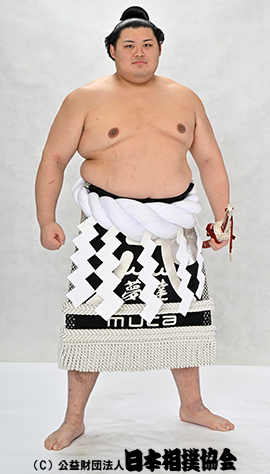
Onosato has won five out of the ten top-division tournaments he has participated in. Promoted to yokozuna after winning back-to-back tournaments as an ozeki — becoming the first Japanese wrestler promoted to yokozuna since Kisenosato in 2017 - he is considered by most analysts to be on pace for a historically significant career if he remains healthy. His January 2026 tournament was affected by a shoulder injury sustained in November 2025, yet he still managed ten wins. When fully fit, his combination of size, technique, and competitive temperament is considered the most complete package in the sport.
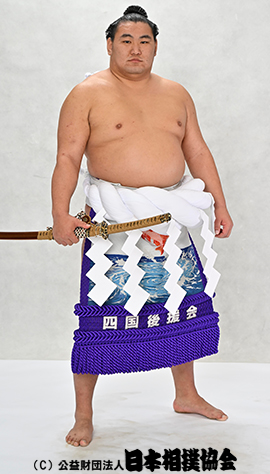
Hoshoryu — Yokozuna (74th), the athletic technician
Promoted to yokozuna in early 2025 after winning the New Year tournament, Hoshoryu brings an athletic, dynamic style to the top rank. His bouts against Onosato are among the most anticipated matchups of any tournament — two young yokozuna of contrasting styles creating genuine tension from the moment the banzuke is published. Hoshoryu's 2025 was affected by injuries that prevented him from consistently challenging for titles, but at his best he is the most visually exciting wrestler in the sport.
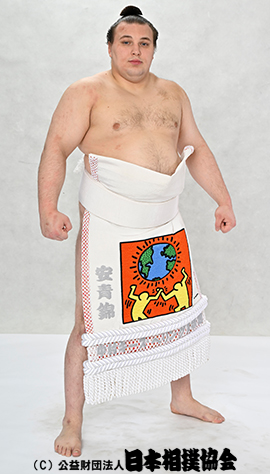
Aonishiki — Ozeki, the Ukrainian phenomenon
Aonishiki Arata, whose real name is Danilo Yavhushyshyn, won the Emperor's Cup in November 2025, becoming the first Ukrainian to claim the title, and was subsequently promoted to ozeki — the fastest anyone has earned that rank since the current system was established in 1958.
He then won back-to-back championships in January 2026, becoming the first newly promoted ozeki to win a tournament since 2006. At 21 years old, he arrived in Japan in 2023 after fleeing the war in Ukraine and entered the sumo system at the lowest level. His rise through the six professional divisions was so rapid it drew comparisons to wrestlers who had been training since childhood in Japan's feeder system — despite Aonishiki having no sumo background whatsoever before arriving in Japan. His background is in Olympic wrestling, and he has brought techniques from that discipline into sumo in ways the sport has rarely seen.
With consecutive tournament wins and multiple records under his belt, Aonishiki will have the chance to compete for promotion to yokozuna. If he achieves it, he will become the first European-born wrestler in the sport's history to reach the highest rank.
The three-way dynamic between Onosato, Hoshoryu, and Aonishiki — two established yokozuna and a Ukrainian ozeki who has beaten both of them — is the defining storyline of sumo in 2026 and the strongest argument for attending a tournament this year specifically.
How Sumo Stables Work
Every professional sumo wrestler belongs to a heya — a stable — which functions simultaneously as training facility, dormitory, and family unit. A wrestler joins a stable as a teenager, typically straight from middle or high school, and lives, trains, and eats there for the duration of their career.
The stable is headed by an oyakata — a former wrestler, typically a retired champion, who has purchased or inherited the right to operate it. The oyakata is responsible for recruiting, training, and managing every wrestler in the stable. Wrestlers eat together, clean the stable together, and train together every morning — the hierarchy within the stable mirrors the ranking hierarchy, with junior wrestlers serving senior wrestlers and performing domestic duties before they earn the right to focus primarily on training.
Morning training (keiko) begins before 6am and runs for approximately four hours. It is not open to the public in most stables, but a small number permit visitors to observe from a gallery above the practice ring. The Arashio stable in the Nihonbashi district of Tokyo is the most well-known for allowing outside observation. Watching keiko — particularly the sheer volume of repetition involved in sumo training, the same throws practised hundreds of times, the same footwork drills until the movement is unconscious — gives a sense of what professional sumo actually demands that attending a tournament alone cannot.
The chanko-nabe (hot pot) that sumo wrestlers eat is nutritionally designed to build mass efficiently: high in protein and carbohydrates, eaten in large quantities twice a day, supplemented by sleep after the midday meal to encourage weight gain. The highest-ranked wrestlers eat first; junior wrestlers eat what remains.
The Ritual Before the Match
Understanding the pre-bout ritual transforms the experience from what can appear to be two men stalling into a genuinely charged ceremony.
When the two wrestlers scheduled to fight enter the ring area, the referee — the gyoji — announces them in a formal chant. The wrestlers go through a series of preparatory movements: squatting at the corners of the ring, clapping to attract the attention of the gods, extending their arms palm-up to demonstrate they carry no weapons, and stamping their feet (shiko) to drive evil spirits into the earth. They scatter salt across the ring — a Shinto purification ritual — and face each other at the centre line.
The face-off can be extended multiple times. Each wrestler controls when they are ready to engage; if one feels the other is not ready, they will stand and return to their corner to repeat the salt-scattering and foot-stamping. The total preparation time is fixed by rank — yokozuna have the longest preparation allowance, reflecting their ceremonial status — and a clock visible to the crowd counts it down.
When both wrestlers finally crouch and place their fists on the line simultaneously, the bout begins. It typically ends within seconds.
What Happens During a Match
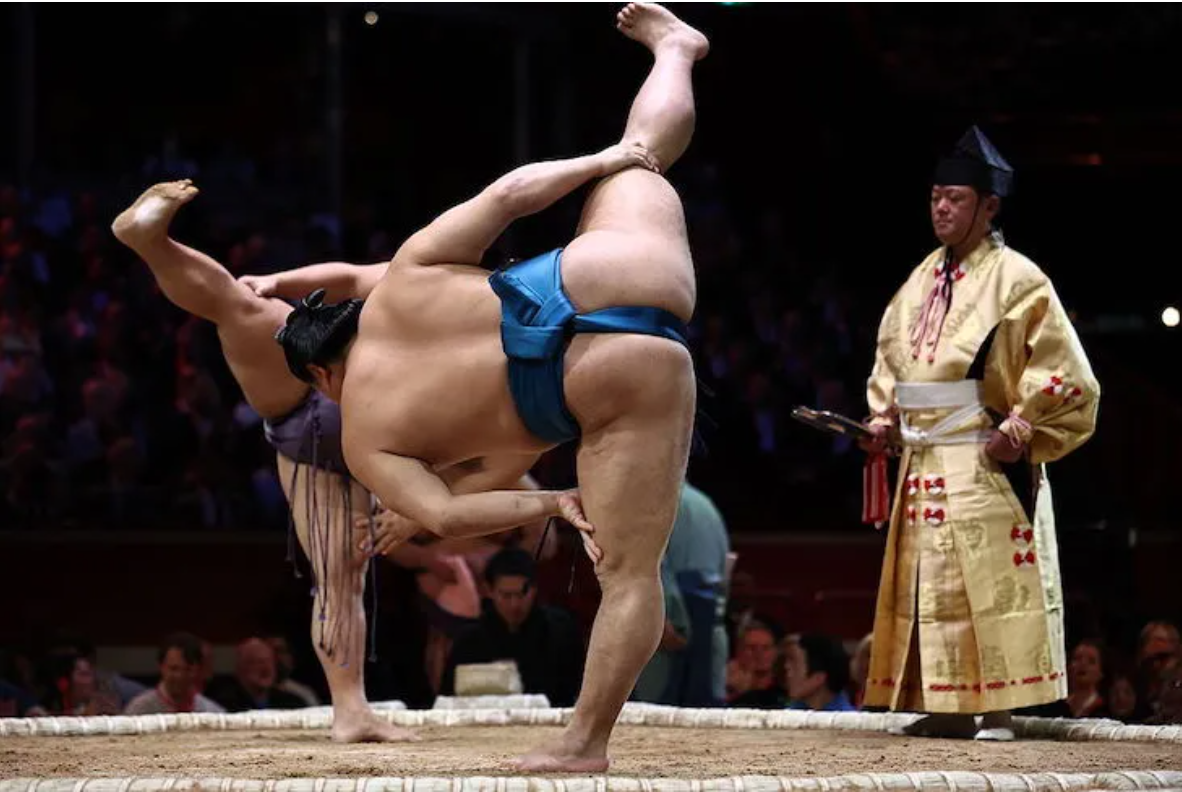
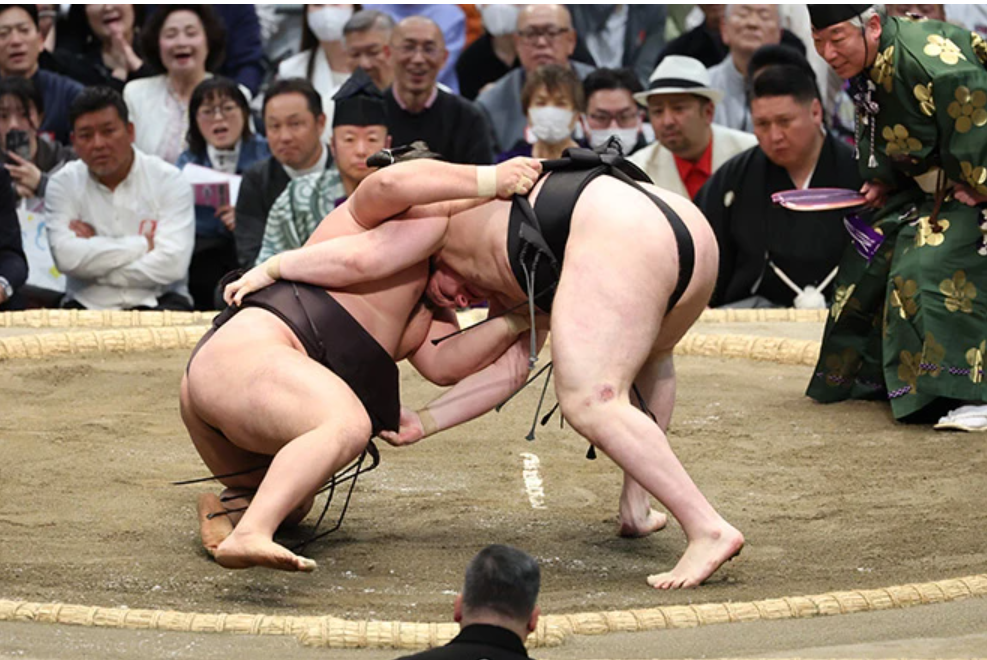
The rules of sumo are simple. The first wrestler to touch the ground with any body part other than the soles of their feet, or to step outside the ring, loses. The ring (dohyo) is 4.55 metres in diameter, made of packed clay with a rice-straw boundary rope (tawara) marking the edge.
Within these constraints, around 82 recognised techniques (kimarite) have been catalogued, ranging from straightforward pushes (oshi) and grabs of the belt (yotsu-zumo) to throws, trips, and the rare but spectacular kimedashi (arm-lock push-out). The outcome of a bout is formally announced by the gyoji who raises their fan toward the winning wrestler, followed by confirmation from the five judges (shimpan) seated around the ring.
On the final day of each tournament, the last few bouts — particularly the final three, which traditionally feature the highest-ranked wrestlers — draw the most intense crowd response. When a yokozuna falls to a lower-ranked wrestler, the crowd throws zabuton cushions onto the dohyo — technically against the rules, traditionally tolerated as an expression of shock and appreciation. It is one of the most distinctive crowd behaviours in global sport.
Ticket Types and How to Buy Them
There are mainly two types of seats at grand sumo tournaments.
Masu seats are the traditional box seats on the floor level, designed for four people sitting on cushions. They offer the most atmospheric experience — you are close to the dohyo, surrounded by other spectators in an intimate configuration, and can order food and drink to be delivered to your box. They are also the most expensive and the most quickly sold out for popular days.
Chair seats occupy the upper levels and offer a full view of the ring with assigned individual seating. These are more comfortable for Western visitors unfamiliar with sitting cross-legged for hours, and are generally easier to obtain.
Day-of tickets (hiyake-seki) are available at the venue box office on the morning of each day's programme for any unsold seats. Arriving early — the box office typically opens at 8am and doors open around 9am — gives the best chance of day-of seats. The first bouts of the day begin in the morning with lower-division wrestlers; the top Makuuchi bouts start in the afternoon and the final bout of the day (musubi-no-ichiban) typically takes place around 6pm.
Online purchase is possible through the Japan Sumo Association's official website (sumo.or.jp), which has an English interface, and through major Japanese ticket platforms including Ticket Pia and CN Playguide. For the January and May Tokyo tournaments, popular days — particularly the final weekend — sell out weeks in advance.
Third-party ticket services including buysumotickets.com cater specifically to international visitors and provide English-language support for purchase and attendance.
The most strategically valuable days to attend are the middle weekend (Days 7–8) and the final three days (Days 13–15). The opening days feature full crowds but more predictable results; the final days carry the most competitive tension as the tournament winner becomes clear.
Where to Watch: The Four Venues
Ryogoku Kokugikan, Tokyo
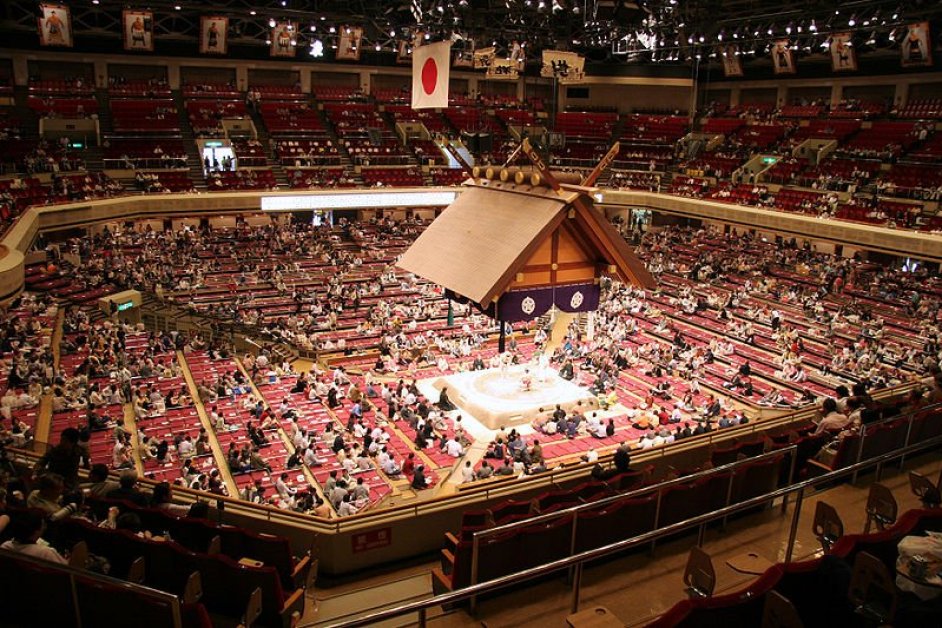
The home of sumo. The Ryogoku Kokugikan hosts three of the six annual tournaments — January, May, and September - and is the venue most associated with the sport internationally. It seats approximately 11,000 people and contains a sumo museum, a chanko restaurant, and a retractable roof suspended from a central support structure above the ring. The neighbourhood of Ryogoku itself is worth visiting independently — it contains numerous sumo stables, chanko restaurants, and a concentration of sumo culture unmatched anywhere else in the country.
Getting there: Ryogoku Station on the JR Sobu Line (one minute on foot from the West exit) or Ryogoku Station on the Toei Oedo Line (five minutes on foot).
Edion Arena Osaka
The March tournament in Osaka has a reputation for the most vocal and passionate crowds of the year. The arena is in central Osaka, approximately five minutes on foot from Namba Station.
IG Arena, Nagoya
The July tournament in Nagoya is held at the IG Arena, which opened in 2024 and is the newest of the four venues. It is within five minutes of Nagoya Station.
Fukuoka Kokusai Center
The November tournament in Fukuoka closes the sumo year. The atmosphere is festive and the crowd tends toward the relaxed end of the spectrum. Approximately 15 minutes on foot from Hakata Station.
Beyond the Tournament: Sumo Experiences Year-Round
Grand tournaments take place only six times a year for 15 days each. Outside tournament periods, sumo experiences are available through:
Stable tours and keiko observation: Several Tokyo stables permit visitors to observe morning practice. The Arashio stable in Nihonbashi is the most accessible for non-Japanese speakers. Tours are typically arranged through agencies in advance.
Jungyo — exhibition tours: Between tournaments, wrestlers travel to regional cities for exhibition matches (jungyo). These are less formal than honbasho, more accessible, and represent the best opportunity to see sumo in cities that do not host grand tournaments. Jungyo dates are announced by the JSA several months in advance.
Sumo museum: The Sumo Museum inside the Ryogoku Kokugikan is free and open on non-tournament days. It contains banzuke charts, portraits, equipment, and archival material spanning centuries of professional sumo history.
Practical Information
Duration: The top-division programme runs from approximately 2:30pm to 6pm, with the final bouts of the day drawing the largest crowds. Arriving at 3pm for a 6pm finish is reasonable for first-time visitors who want atmosphere without sitting through the full day.
Food: Chanko-nabe restaurants are concentrated in the Ryogoku neighbourhood around the Kokugikan. Eating chanko before or after attending a Tokyo tournament is the standard recommendation and worth following.
Dress code: None. Japanese audiences range from formal business wear to casual clothing. Masu seats require removing shoes before entering the box.
Alcohol: Beer, sake, and food are available throughout the venue and can be delivered to masu boxes. Drinking during sumo is entirely normal and encouraged.
NHK broadcast: Sumo is broadcast live on NHK World, the international English-language channel, for the final 90 minutes of each tournament day. Watching tournament coverage before attending in person provides useful context for the ranking situation and current storylines.
Find events happening near you
Browse hundreds of events across Japan — translated from Japanese, updated regularly.
Browse Events