Cherry Blossom Season in Japan: The Events Nobody Tells You About
By What's On Japan Team
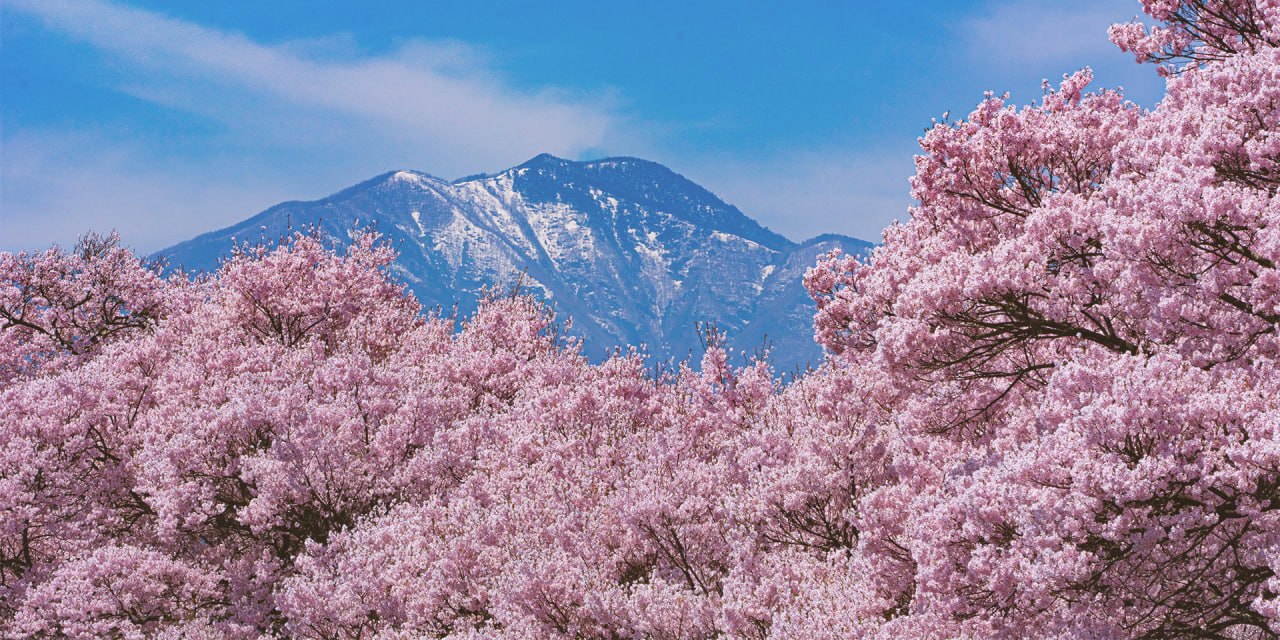
Every spring, Japan undergoes a transformation that has captivated people for more than a thousand years. From the southernmost islands of Okinawa to the northern reaches of Hokkaido, cherry trees burst into bloom in a rolling wave of pale pink — a season so anticipated that national weather forecasts track it in real time, and millions of people plan their travel around it.
This is sakura season. And there is nothing else quite like it.
The blossoms last only one to two weeks in any given place. That brevity — the very thing that makes them so difficult to catch — is also what makes them so deeply meaningful. In Japanese culture, the fleeting cherry blossom has long been understood as a mirror for human life itself: brilliant, fragile, and gone before you are ready.
This guide covers everything you need to know: when the season runs, where to find the best viewing spots from north to south, the history and traditions of hanami flower viewing, the food and drink of the season, and practical tips for making the most of the experience.
When Is Cherry Blossom Season in Japan?
Cherry blossom season in Japan does not happen on a single date. It travels. The sakura zensen — the sakura front — moves northward across the country from late January through early May, meaning the season as a whole lasts several months, even though any individual location enjoys only a brief window.
The progression looks roughly like this:
Region | Typical First Bloom | Typical Full Bloom (Peak) |
Okinawa | Late January – early February | Early February |
Kyushu (Fukuoka, Kagoshima) | Mid–late March | Late March – early April |
Shikoku (Kochi, Matsuyama) | Mid–late March | Late March – early April |
Late March | Late March – early April | |
Late March | Late March – early April | |
Chubu (Nagoya, Nagano mountains) | Late March – early April | Early–mid April |
Tohoku (Sendai, Aomori, Hirosaki) | Early–mid April | Mid–late April |
Hokkaido (Sapporo, Hakodate) | Late April – early May | Early–mid May |
The precise dates shift year to year depending on winter temperatures and the arrival of spring warmth. Warmer winters tend to push the bloom earlier; late cold snaps can delay it. From January onwards, the Japan Meteorological Corporation and Japan Weather Association both publish detailed city-by-city forecasts — worth bookmarking as your travel dates approach.
Full bloom, known as mankai (満開), typically lasts five to seven days before petals begin to fall. A single rainstorm or strong wind can end the season overnight, which is part of why watching the forecasts matters so much.
For most first-time visitors targeting Tokyo, Kyoto, and Osaka, late March to early April is the classic window. If you want to see sakura with fewer crowds and are flexible on dates, heading north — to Tohoku in mid-April, or Hokkaido in early May — opens up a second and third season.
The Best Cherry Blossom Spots in Japan, Region by Region
Okinawa — Japan's First Bloom
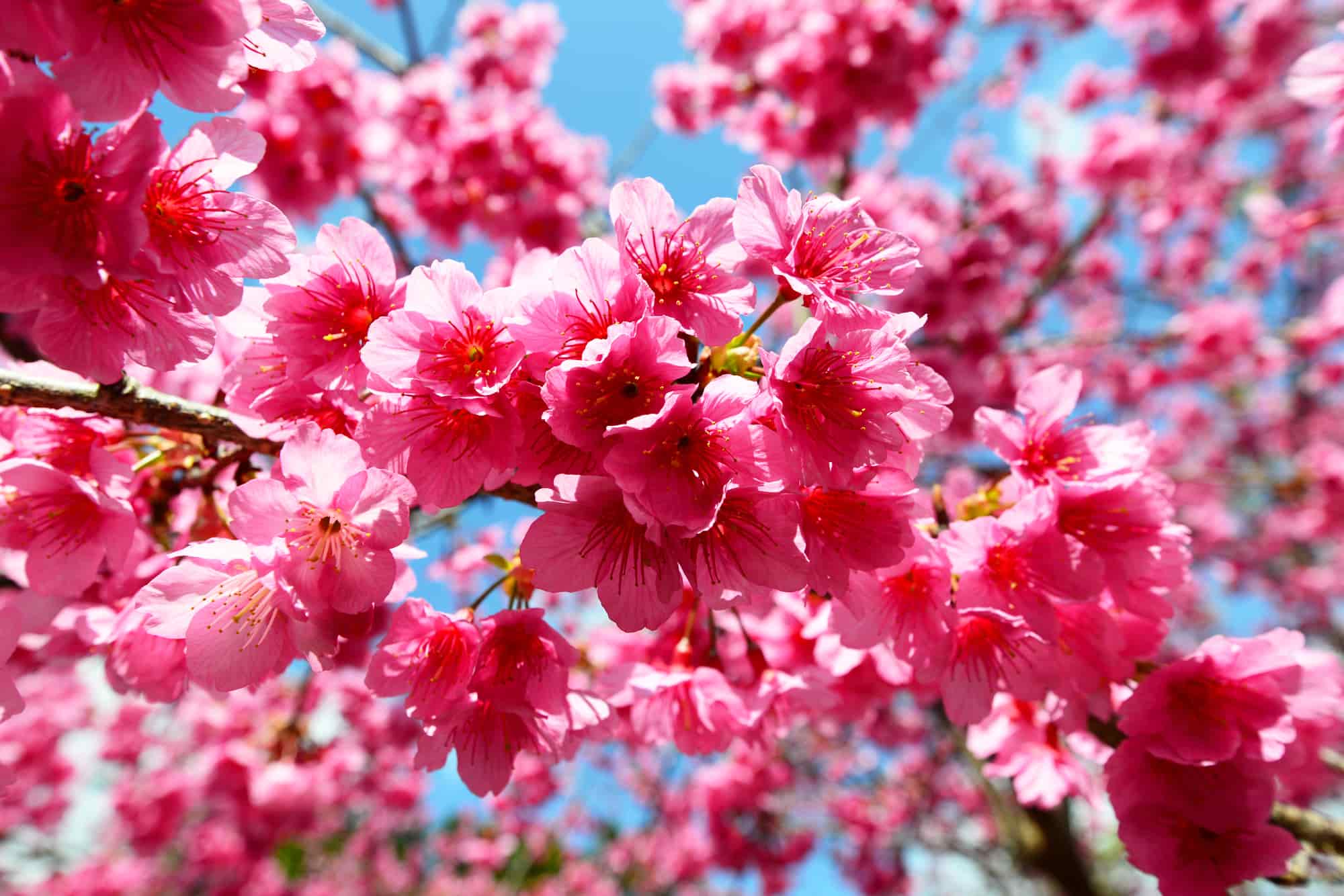
The sakura season begins not in spring but in the heart of winter, in the subtropical islands of Okinawa. The cherry trees here are a different species — Kanhizakura, with deep pink, pendulous blooms quite unlike the pale Somei Yoshino that dominates the mainland. Peak viewing is usually early February, and the contrast of vivid pink blossoms against blue tropical sky makes for a striking spectacle. The Nago Cherry Blossom Festival in northern Okinawa is one of the island's most popular seasonal events.
Kyushu — Early Season Warmth
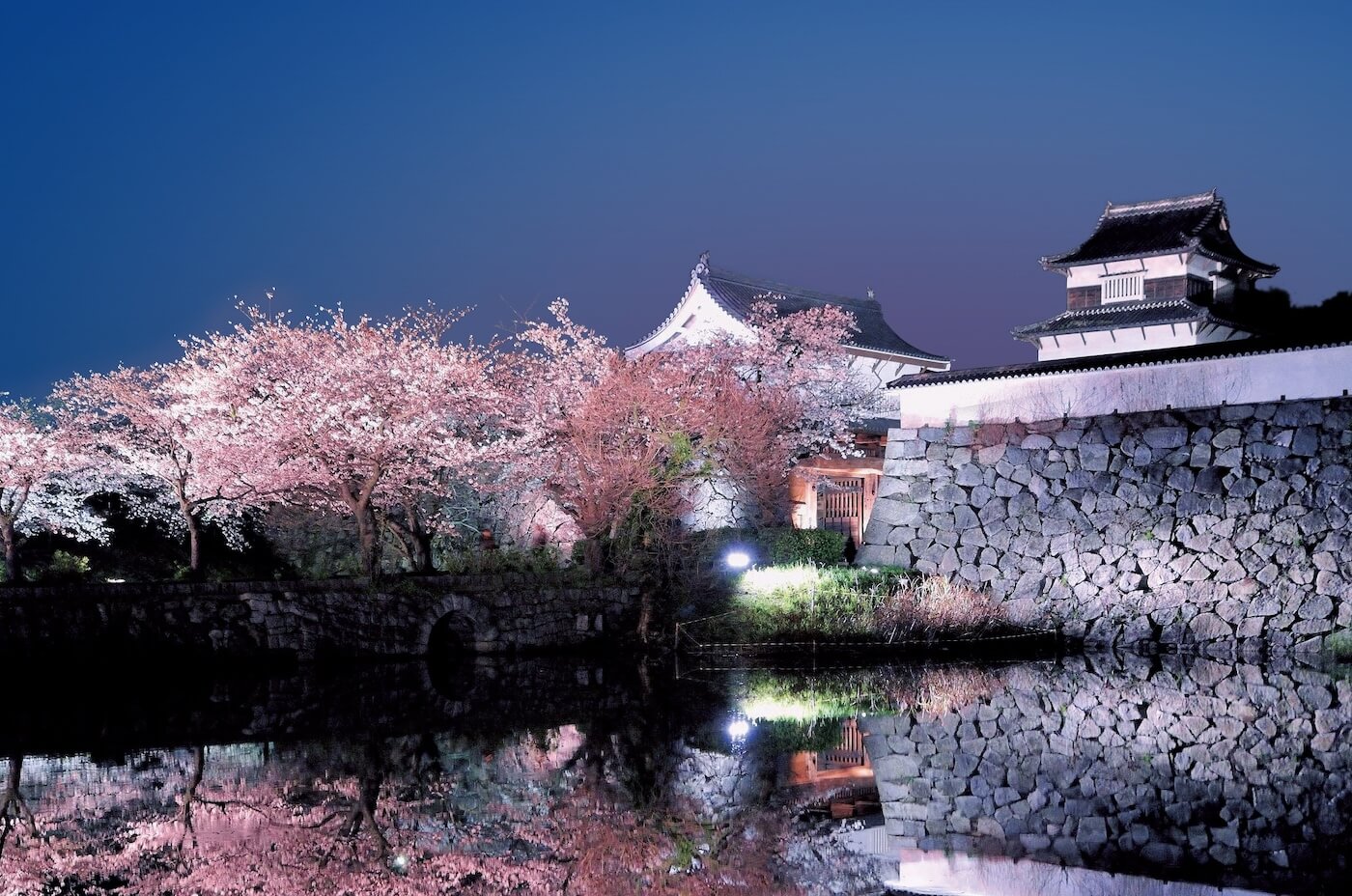
Fukuoka: Maizuru Park, surrounding the ruins of Fukuoka Castle, is the city's most popular hanami spot, with around 1,000 cherry trees framing the old stone walls. The Nishi Park area nearby adds a quieter alternative with views over Hakata Bay.
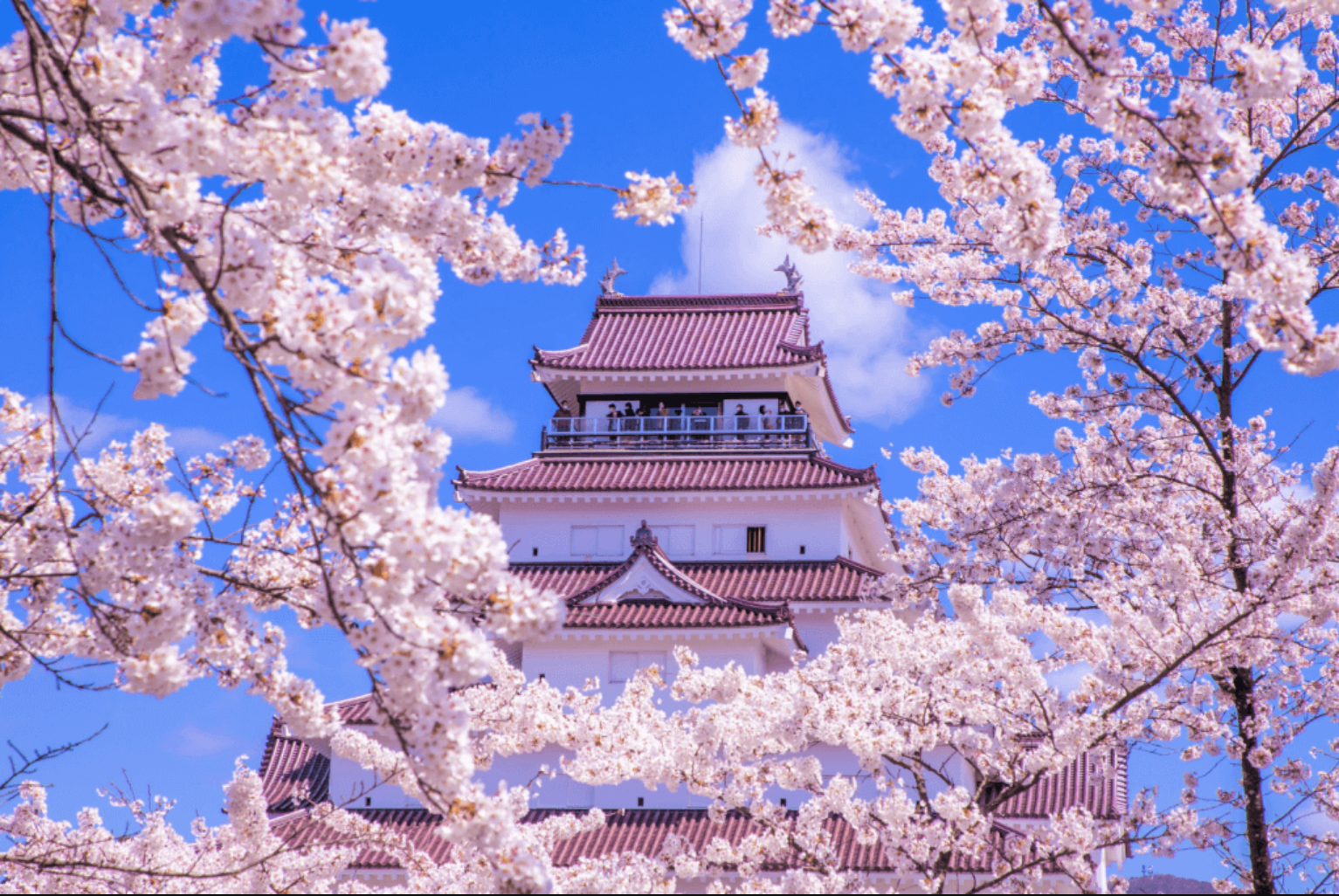
Kumamoto: When it's not under reconstruction, Kumamoto Castle with its blossoms is among the most photogenic castle-and-sakura combinations in Japan. The surrounding park is a major local hanami destination each spring.
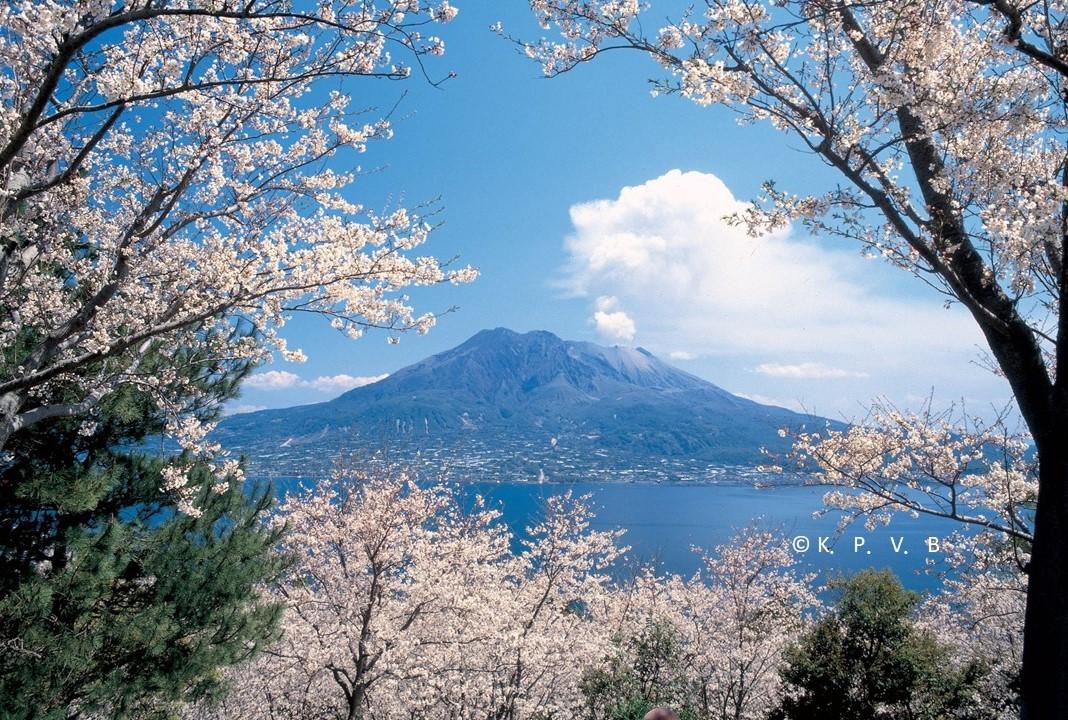
Kagoshima: With Sakurajima volcano visible in the background, sakura season here carries a drama found nowhere else in Japan.
Shikoku — The Underrated Region
Shikoku consistently delivers excellent cherry blossom viewing with far fewer foreign visitors than the major cities. Kochi is known for unusually early blooms and a local tradition of nighttime hanami. Matsuyama, with its hilltop Matsuyama Castle surrounded by blossoms, is one of Shikoku's finest seasonal sights.
Kansai — The Historic Heart of Sakura Seasons
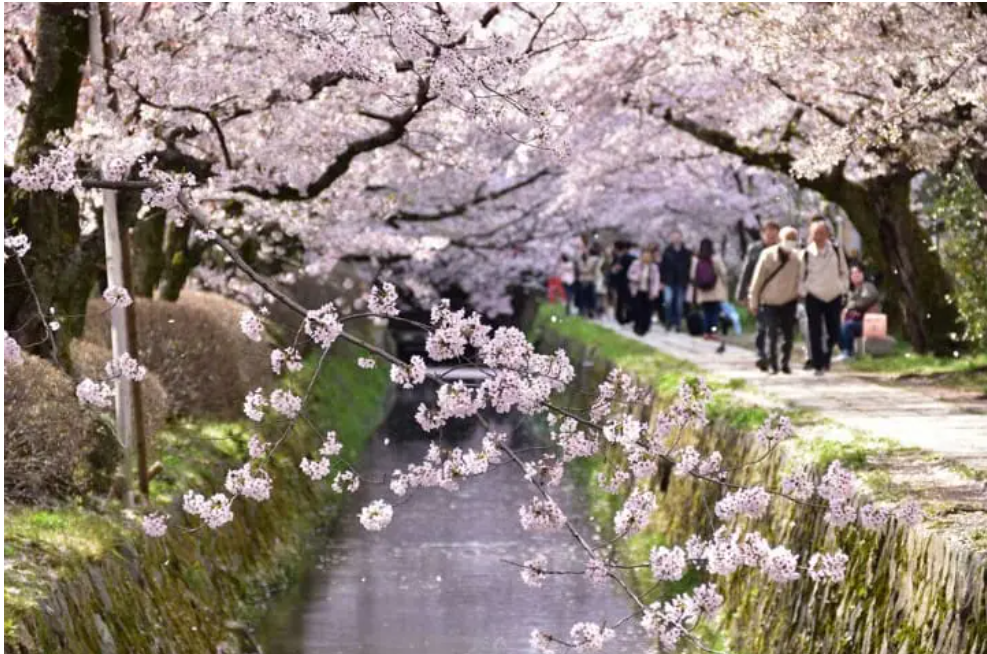
Kyoto is the city most visitors associate with cherry blossom season, and for good reason. The ancient capital's temples, shrines, and garden paths create backdrops that have been celebrated in Japanese art and poetry for centuries.
Philosopher's Path (Tetsugaku no Michi): A two-kilometre canal-side walkway in the Higashiyama district, lined entirely with cherry trees. Arrive before 8am to experience it in something approaching quiet.
Maruyama Park: Kyoto's most popular hanami spot, centred on a famous weeping cherry tree that is illuminated at night. Food stalls and the convivial atmosphere of genuine local celebration.
Kiyomizudera: The famous wooden stage temple, with blossoms filling the valley below. Outstanding at dusk.
Arashiyama: The riverbanks of the Oi River lined with cherry trees, backed by forested hills. Beautiful and slightly less crowded than central Kyoto — especially in the early morning.
Ninna-ji Temple: Home to the late-blooming Omuro Zakura, a dwarf variety that flowers a week or two after the main season. Useful for visitors who miss peak bloom elsewhere.
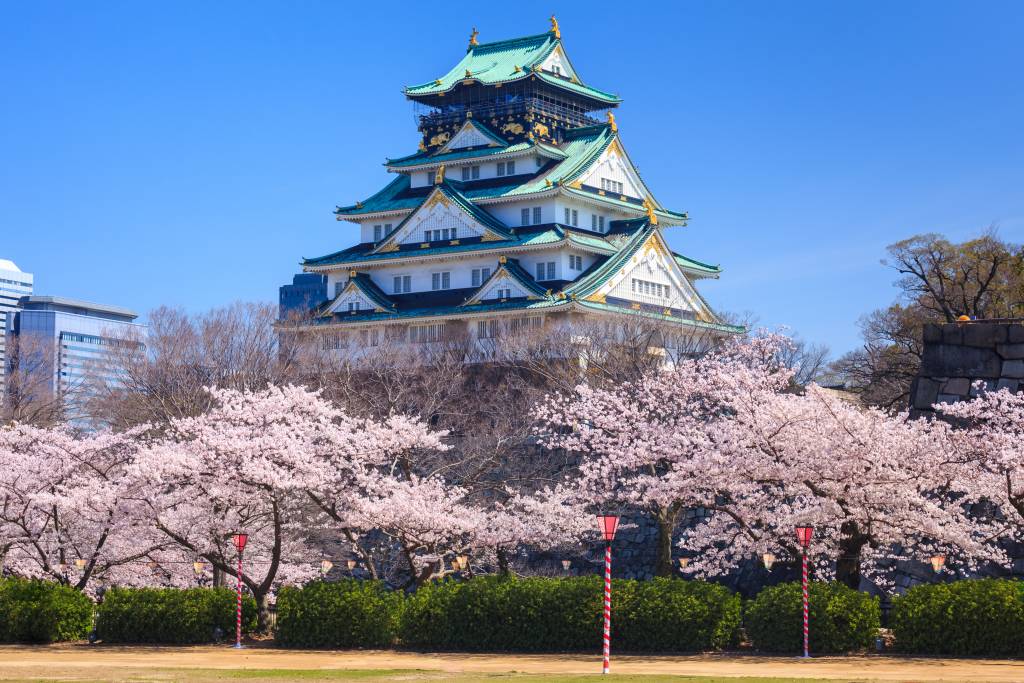
Osaka: Osaka Castle Park has approximately 3,000 cherry trees surrounding the castle grounds, with evening illuminations making it equally spectacular after dark. The Nishinomaru Garden inside the park offers particularly good castle-and-blossom views. Separately, the Okawa River near Osaka Business Park is lined with nearly 5,000 trees along its banks — a less-visited alternative that locals love.
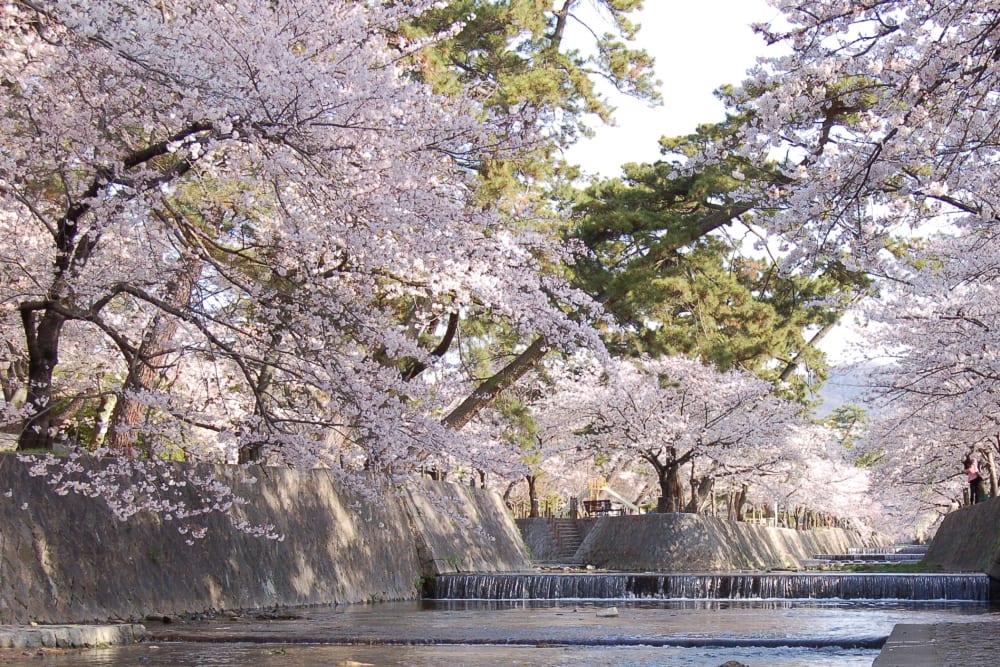
Kobe: Shukugawa Park in Nishinomiya, just east of Kobe, is one of the Kansai region's finest sakura avenues — a long tree-tunnel of blossoms over a riverside path. Suma Rikyu Park in western Kobe offers a hillside setting with views over Osaka Bay.
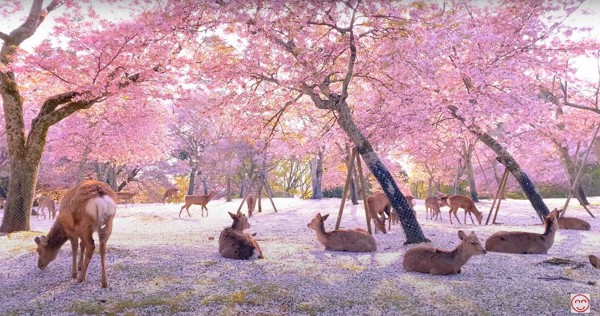
Nara: Nara Park's 1,700 cherry trees compete for attention with the park's famously tame deer. The combination is genuinely absurd and genuinely wonderful. For something more extraordinary, Mount Yoshino lies two hours from Osaka — see below.
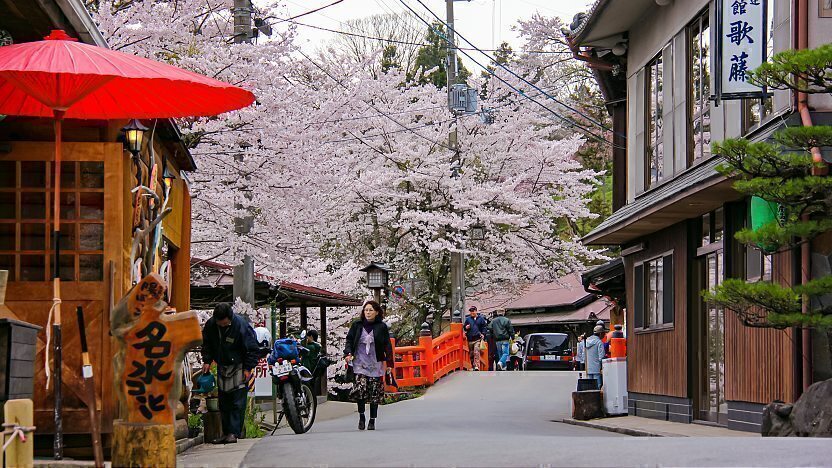
Mount Yoshino, Nara: If you can visit only one cherry blossom destination beyond the major cities, make it Yoshino. A UNESCO World Heritage Site and Japan's most famous hanami pilgrimage since the feudal era, Yoshino-yama is blanketed with over 30,000 cherry trees of multiple varieties, planted at different elevations so that the bloom cascades up the mountain over several weeks in April. The sight of layered blossoms climbing the hillside — from the lower Shimo-Senbon through to the upper Kami-Senbon — is unlike anything else in Japan. Book accommodation well in advance; the mountain is extremely popular in peak season.
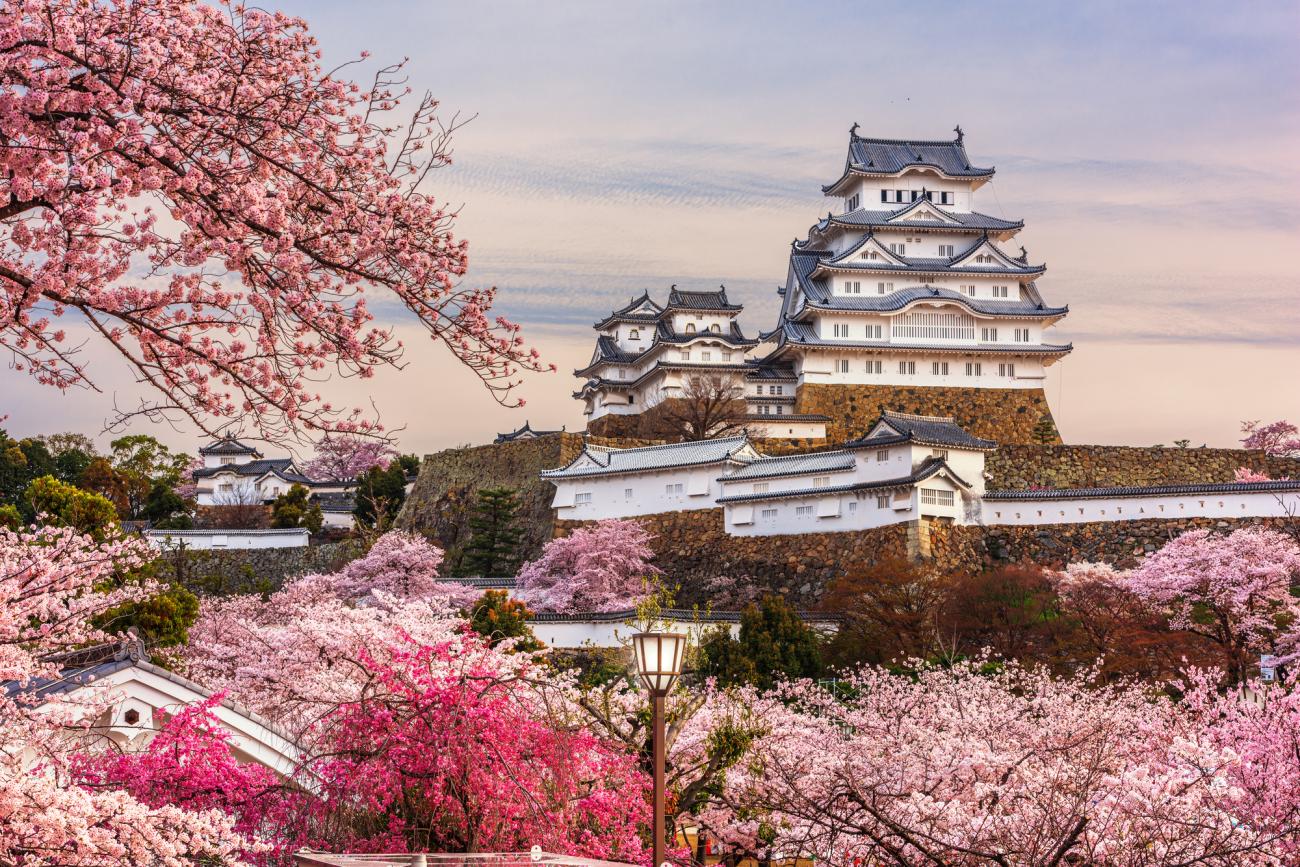
Himeji: Himeji Castle — the finest surviving feudal castle in Japan and a UNESCO World Heritage Site — is surrounded by more than 1,000 cherry trees. The combination of the castle's white walls and pink blossoms is among the most photographed sights in the country. It sits an hour from Osaka by Shinkansen and draws significantly smaller crowds than Kyoto or Tokyo. Do not miss it.
Kanto — Tokyo and Beyond
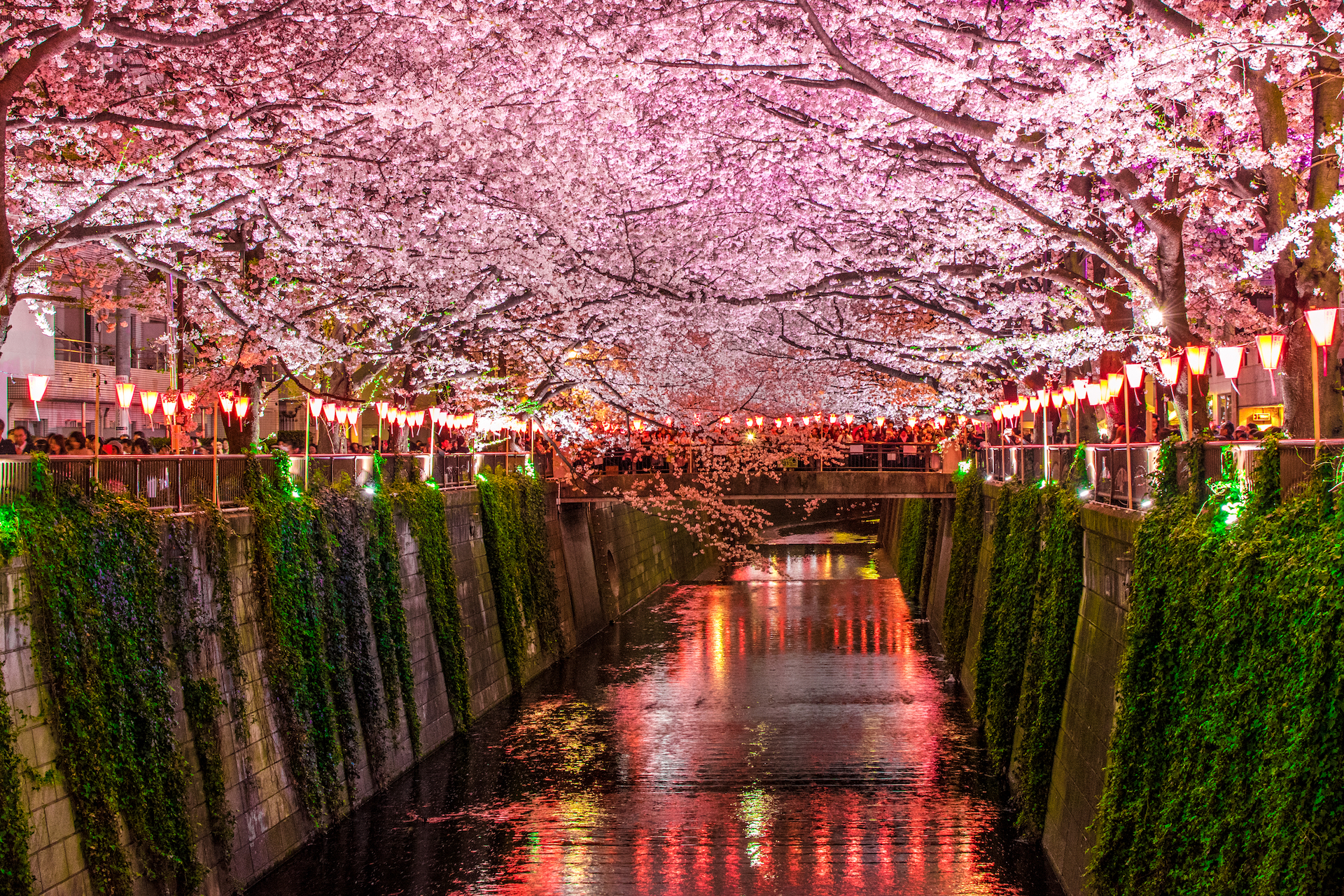
Tokyo has so many excellent hanami spots that the challenge is choosing rather than finding.
Shinjuku Gyoen: Over 1,000 cherry trees spanning 65 varieties, with both early and late-blooming cultivars extending the season longer than elsewhere. The French and Japanese formal gardens provide a graceful setting. One of Tokyo's best.
Chidorigafuchi: The moat along the northwest edge of the Imperial Palace is lined with cherry trees that arch over the water. Rowboat rentals allow you to view the canopy from below — one of Tokyo's most romantic hanami experiences.
Nakameguro Canal: The hip Nakameguro neighbourhood comes into its own when cherry trees lining the canal burst into bloom. By evening, with lanterns lit and cafés spilling tables onto the banks, it becomes one of Tokyo's most atmospheric seasonal scenes.
Ueno Park: Tokyo's most famous hanami park — 800 Somei Yoshino trees, significant cultural history, and a festival atmosphere that can feel more like a street party than a nature experience. Peak crowds are extraordinary; arrive at dawn or embrace the energy.
Rikugien Garden: A historic stroll garden with a celebrated weeping cherry tree at its centre. Illuminated at night. Quieter and more refined than the major parks.
Mount Fuji Area: The Chureito Pagoda at Arakurayama Sengen Park, with cherry trees in the foreground and Mount Fuji behind, is one of the most recognisable images in Japan. The Lake Kawaguchiko shore adds further Fuji-and-blossom views. Aim for early April, when Fuji's snowcap is still prominent against the pink blossoms below.
Takato, Nagano: Takato Castle Ruins Park is lesser-known internationally but revered among Japanese travellers. Its 1,500 Takato Kohigan trees produce an unusually vivid, deep pink bloom — distinctly different from the pale Somei Yoshino common elsewhere. The combination of bold colour and castle ruins is remarkable. Peak bloom is usually early to mid-April.
Tohoku — The Season Extends North
The Tohoku region offers sakura lovers a second chance — and an experience that feels far more authentic than the tourist-saturated spots further south.
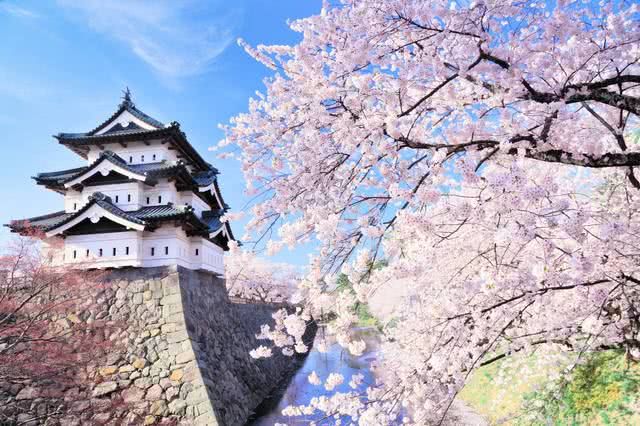
Hirosaki, Aomori: Hirosaki Park is consistently cited by those who have been everywhere as Japan's finest cherry blossom destination. Around 2,600 trees of 52 different varieties fill the castle grounds, their branches so densely flowered they nearly hide the sky. The castle moats fill with fallen petals — visitors rent rowboats to drift through the soft pink channels under weeping shidarezakura trees. Night illuminations transform the scene entirely. Peak bloom is typically late April, providing a graceful extension of the season for those who miss the main window elsewhere. Book accommodation months ahead.
Kakunodate, Akita: A beautifully preserved samurai district whose narrow streets are lined with weeping cherry trees. The combination of Edo-period architecture and sakura is unusually evocative. The Hinokinai River embankment — designated a National Place of Scenic Beauty — adds a further 2km of riverside blossom. Peak bloom is typically mid-to-late April.
Sendai: The city's Tsutsujigaoka Park and Nishi Park are popular local hanami spots. Sendai sits about a week behind Tokyo in bloom timing, making it useful for late arrivals chasing the season north.
Hokkaido — The Final Frontier
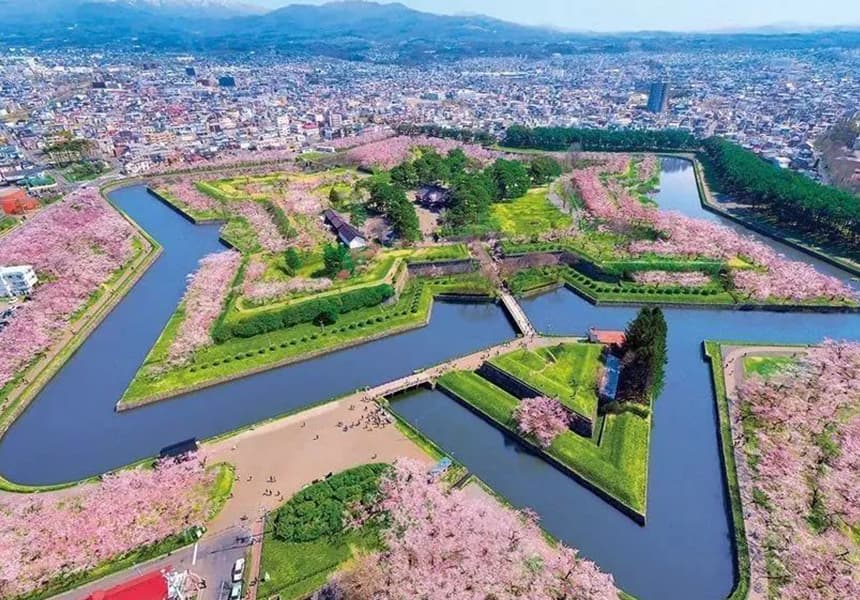
Hokkaido blooms last of all, in late April and early May — a final act to a season that began in Okinawa three months earlier.
Goryokaku, Hakodate: A star-shaped Western-style fort built in the late Edo period, now a public park ringed with over 1,000 cherry trees. Viewing from the adjacent Goryokaku Tower shows the star shape of the moats filled with pink — one of Japan's more unusual cherry blossom perspectives.
Sapporo: Hokkaido Shrine and adjacent Maruyama Park are the city's most popular hanami spots. Moerenuma Park — designed by sculptor Isamu Noguchi — adds a more artistic setting, with 1,900 trees spread across a park of striking geometric landforms.
Matsumae: Matsumae Castle, the only feudal castle in Hokkaido, is surrounded by over 10,000 cherry trees of more than 250 varieties. Because the different varieties bloom at different times, the hanami season here can last almost a month — unusual for Hokkaido.
Hanami: The Tradition of Flower Viewing
A Thousand Years of Celebration
The tradition of hanami — literally "flower viewing" (花見, hana: flower, mi: to view) — is at least 1,300 years old, with roots in the Nara period (710–794 CE). In those early centuries it was actually the plum blossom, revered in China, that was celebrated. The shift to cherry blossoms came gradually during the Heian period (794–1185 CE), as Japan sought to define its own cultural identity distinct from its continental influence.
Emperor Saga of the Heian period is credited with popularising cherry blossom viewing, holding formal flower-viewing banquets at the Imperial Palace in Kyoto where courtiers composed waka poetry beneath blooming trees. The Tale of Genji, written at the turn of the eleventh century, features sakura as a recurring motif, embedded in the emotional texture of aristocratic life.
During the feudal period, powerful warlords held extravagant hanami celebrations. Toyotomi Hideyoshi, one of the unifiers of Japan, reportedly held a spectacular five-day hanami feast at Daigoji Temple in Kyoto in 1598, attended by hundreds of guests. Centuries later, the Tokugawa shogun Yoshimune planted cherry trees along rivers and in public spaces in Edo (present-day Tokyo) specifically so that commoners could participate in the tradition. From there, hanami became the nationwide celebration it remains today.
Mono no Aware — The Pathos of Things
Central to the Japanese understanding of cherry blossoms is a philosophical concept: mono no aware (物の哀れ) — often translated as "the pathos of things" or "the transience of things." The eighteenth-century scholar Motoori Norinaga saw the appreciation of mono no aware as fundamental to Japanese art and literature.
Cherry blossoms embody this idea with unusual clarity. They are beautiful precisely because they do not last. The viewer knows, even as they look up at the pale canopy, that within days it will be gone. This creates an emotional response that is neither pure joy nor pure sadness — something more nuanced and more moving than either. The falling petal is not a loss; it is a reminder to be here, now, while it is still happening.
For the samurai class, this resonance was particularly strong. The brief, brilliant life of the cherry blossom mirrored the bushido ideal — a life of honour, lived fully, accepted without regret.
How Hanami Works Today
Modern hanami is a community affair. Friends, families, and work colleagues spread blue plastic tarps or picnic blankets beneath the trees, eat and drink together, and sit in the company of the blossoms for as long as the day permits.
In companies and offices, the junior member of a team is traditionally sent ahead on the morning of the hanami party to claim a spot — sometimes arriving before dawn to lay claim to the best position under the trees. This custom is both deeply ingrained and warmly satirised.
Yozakura (夜桜) — night viewing — is a distinct and equally beloved experience. Parks and castle grounds across Japan illuminate their cherry trees at night throughout the blossom season, creating an otherworldly atmosphere of glowing pink against dark sky. Some of the finest yozakura experiences are at Hirosaki Castle, Osaka Castle Park, Maruyama Park in Kyoto, and Nakameguro in Tokyo.
Sakura Food and Drink
Cherry blossom season transforms Japan's food landscape. From convenience stores to high-end restaurants, sakura-flavoured and sakura-themed products appear for a few weeks only — and then vanish until the following year.
Traditional Hanami Foods
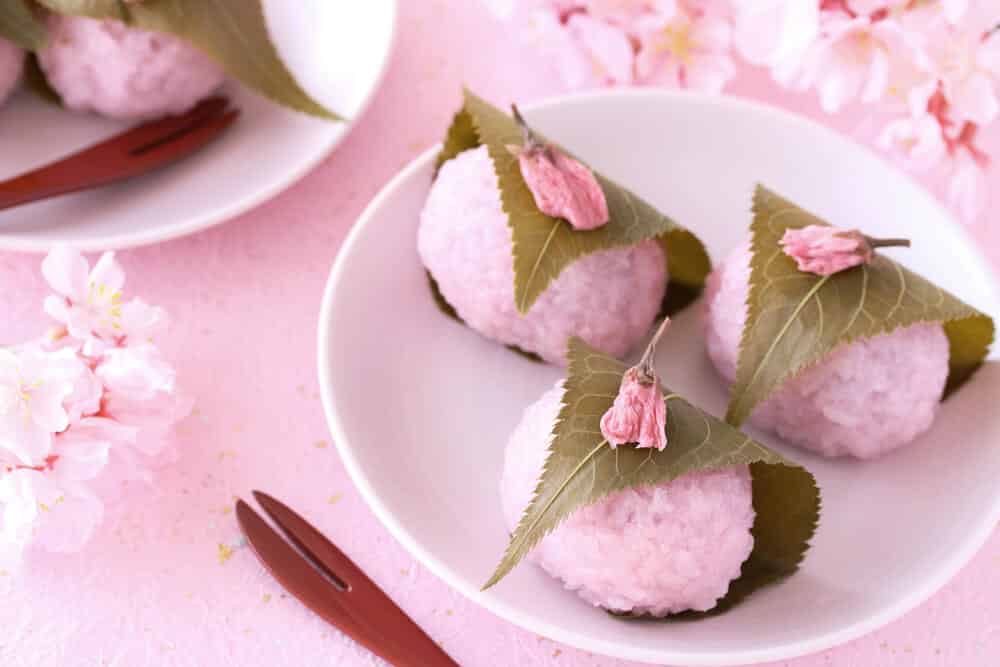
Sakura mochi: A pink rice cake wrapped in a salted cherry leaf. The contrast of sweetness and the subtle savouriness of the preserved leaf is delicate and distinctive. This is probably Japan's most iconic sakura sweet.
Hanami dango: Three mochi rice dumplings on a skewer, coloured pink, white, and green — representing cherry blossoms, snow, and fresh spring growth respectively. Found at virtually every hanami park food stall.
Sakura tea (sakurayu): Hot water poured over salted, pickled cherry blossoms. The flower opens slowly in the cup. Traditionally served at auspicious occasions in Japan, and particularly lovely during sakura season.
Chirashi sushi and inari sushi: Popular hanami picnic foods. Chirashi — scattered sushi — arrives in beautiful bento boxes often decorated with sakura motifs during the season.
Seasonal Drinks and Convenience Store Specials
Japan's convenience stores and café chains produce a wave of limited-edition sakura products every spring. Starbucks Japan's annual sakura drinks — varying year to year but reliably popular — are a seasonal institution. Pink packaging, sakura-flavoured chocolates, sakura lattes, spring-edition canned coffee, and sakura rice crackers appear across FamilyMart, 7-Eleven, and Lawson from late February onwards.
Sake is the traditional drink of hanami, and many craft sake breweries release spring-edition bottles — often with pink labels or sakura motifs — during the season. Sakura beer and sakura-flavoured chuhai (low-alcohol sparkling drinks) round out the options.
Hana yori dango (花より団子) — literally "dumplings over flowers" — is a Japanese proverb for those who are rather more interested in the food than the blossoms. It's used affectionately, with the implication that there's nothing wrong with enjoying both.
Sakura in Japanese Art, Fashion and Culture
Literature and Poetry
Cherry blossoms have been a dominant subject of Japanese poetry since the Heian era. The great haiku poets — Matsuo Basho, Yosa Buson, Kobayashi Issa — all wrote extensively about sakura, their verses threading together observation, impermanence, and emotional truth. Heian-era courtiers sent letters written on seasonal paper, sometimes accompanied by a sprig of cherry blossom, with the text composed as a poem incorporating sakura imagery.
This literary tradition continues. Sakura appears throughout modern Japanese fiction, manga, anime, and film — usually carrying with it the weight of fleeting beauty, transition, and things that cannot be held.
Visual Art
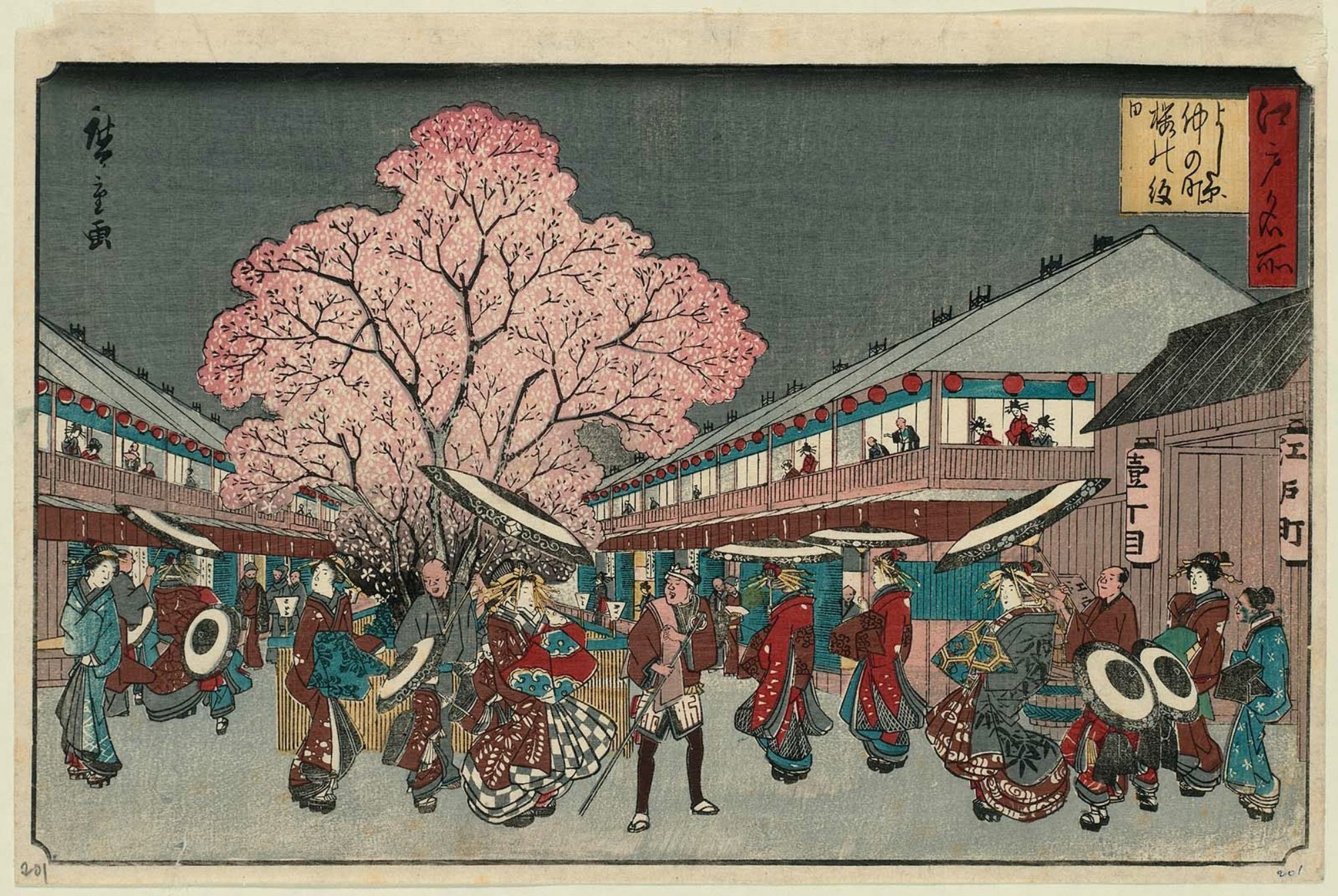
The Edo period (1603–1868) produced an extraordinary body of artwork featuring cherry blossoms. Ukiyo-e woodblock prints by artists including Hiroshige and Hokusai depicted famous hanami spots — Ueno, the Sumida River, Yoshino — with a graphic beauty that shaped how Japan's sakura tradition was understood worldwide. Many of these prints show the pleasure of the crowd as much as the beauty of the blossoms: sake sellers, picnicking families, lantern-lit evenings.
Today, cherry blossom imagery appears across Japanese design, from ceramics and lacquerware to packaging and architecture. The five-petalled cherry blossom motif is one of the most widely recognised symbols of Japan internationally.
Fashion
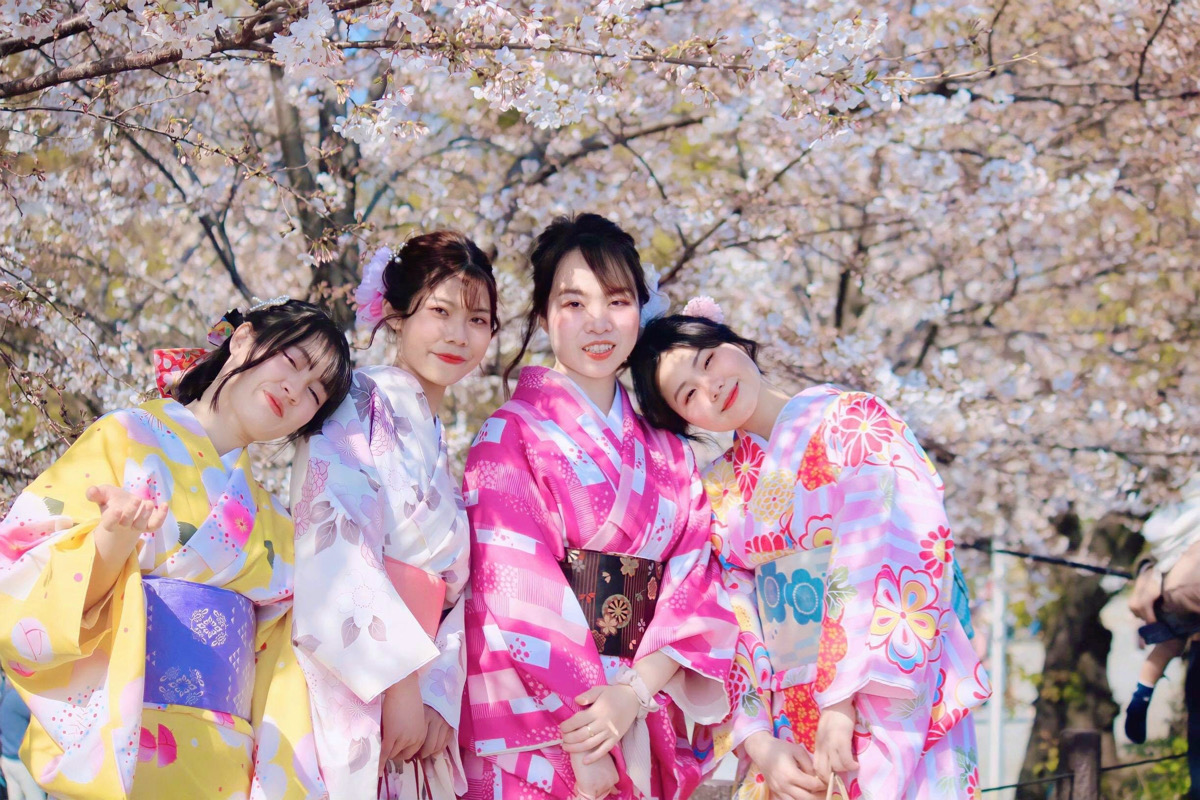
Spring is the season for wearing kimono in Japan, and cherry blossom motifs are among the most popular kimono patterns — particularly in pale pink, white, and soft greens. Kimono rental shops in Kyoto, Tokyo, and other tourist cities see their busiest period of the year during sakura season. Even outside formal kimono wear, pastel spring palettes, floral patterns, and pink-toned clothing flood retail collections from February onwards.
Wearing kimono while viewing cherry blossoms is a long-established Japanese tradition — and entirely accessible to visitors. Rental shops across Kyoto's Higashiyama district and Tokyo's Asakusa neighbourhood offer same-day fittings.
Practical Tips for Cherry Blossom Season
Timing Your Visit
Peak bloom lasts five to seven days. Watch forecasts closely in the week before you travel.
Overcast days can be beautiful — grey skies intensify the pale pink of the blossoms rather than washing them out.
Rainy days during peak bloom can create "sakura snow" — a blizzard of fallen petals — which is spectacular in its own right.
If you miss the peak in one city, travel north. The season follows you.
Avoiding the Crowds
At the most famous spots — Philosopher's Path, Ueno Park, Maruyama Park — arrive before 8am or after 7pm for illuminations.
Weekdays are significantly less crowded than weekends during peak season.
The less-visited north of Japan (Tohoku, Hokkaido) offers world-class viewing with a fraction of the crowd pressure.
What to Bring
A picnic blanket or small tarp — the blue plastic sheets sold in Japanese convenience stores and 100-yen shops are hanami tradition, but bring whatever you have.
Layers — late March and April can be cold in the evenings, particularly in northern regions.
Cash — food stalls at hanami parks are often cash only.
Patience — the best spots fill up fast, especially on weekends.
Booking Accommodation
Hotels in Kyoto and Tokyo fill months in advance for peak sakura dates. If accommodation in your target city is fully booked, consider staying in a nearby city and travelling in for day trips. Osaka is a reasonable base for Kyoto; Yokohama works for Tokyo.
Tracking the Forecast
The two most useful English-language resources for real-time bloom tracking are japan-guide.com/sakura — which aggregates on-the-ground reports across the country — and the Japan Meteorological Corporation's official forecast at n-kishou.com. Both update regularly throughout the season.
Find Cherry Blossom Events Near You
Sakura season in Japan is not just about the trees — it's about the festivals, markets, illuminations, boat rides, and cultural events that spring up around them. We track sakura-related events across Japan in English, updated daily.
Browse Spring Festivals in Japan
Events in Tokyo, Kyoto, Osaka, Kobe, Fukuoka, Sapporo, Hiroshima, Nara
Browse Free Events in Japan during the season
See all upcoming events across Japan
Find events happening near you
Browse hundreds of events across Japan — translated from Japanese, updated regularly.
Browse Events