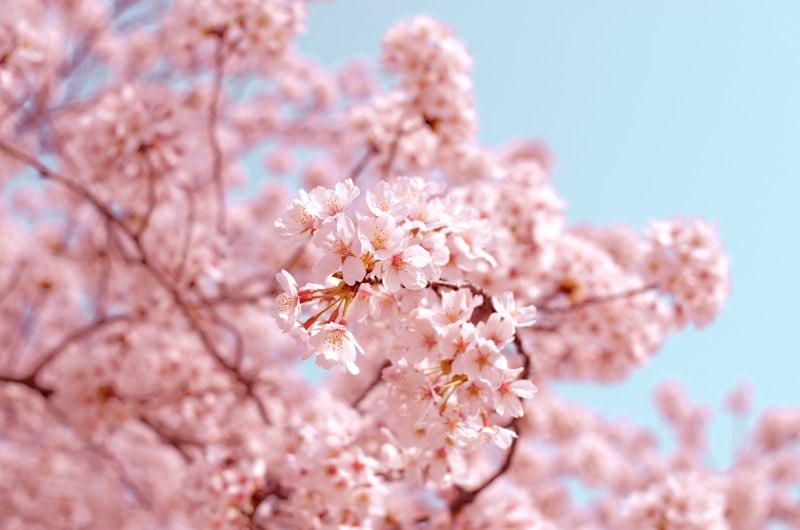
Golden Week Japan 2026: The Complete Guide to Dates, Events, and Surviving the Crowds
By Adrian
Golden Week is the closest Japan gets to a unified national celebration. Four public holidays cluster together in late April and early May, giving the entire country one of its longest consecutive breaks of the year. Streets fill with koinobori carp streamers, neighbourhoods hold matsuri that have continued for centuries, and millions of Japanese people and international visitors move across the country at the same time. It is chaotic, electric, and unlike any other period on the Japanese calendar.
This guide covers everything you need to plan your Golden Week 2026 — exact dates, the holidays explained, the best festivals by city, practical crowd-avoidance strategies, and what to expect on the ground.
When Is Golden Week 2026?
Golden Week 2026 runs from Wednesday, April 29 to Monday, May 6, with Constitution Memorial Day observed on the Monday as a substitute holiday. That gives most people an eight-day window if they take April 30 and May 1 off as annual leave — many Japanese workers do exactly this, turning the four public holidays into a full eight consecutive days off.
Travel activity is anticipated to peak on May 2, with people leaving the large urban centres, and again on May 5 and 6 in the opposite direction. If you want to move between cities, those are the days to avoid. Plan journeys for April 30, May 1, or May 7 instead.
The Four Public Holidays Explained
Golden Week is not one holiday — it is four distinct ones that happen to fall close enough together to create a near-continuous break.
- Showa Day — April 29 Showa Day honours the birthday of Emperor Showa (Hirohito), who reigned from 1926 to 1989. It is a day of reflection on the Showa era — a period that encompassed war, occupation, and one of the most remarkable economic recoveries in modern history. Showa Kinen Park in Tachikawa, Tokyo opens to the public for free on this day - expect it to be very popular.
- Constitution Memorial Day — May 3 This holiday marks the postwar constitution enacted in 1947. Most businesses and attractions are open, and it falls on the same day as one of Japan's biggest festivals (see Hakata Dontaku below).
- Greenery Day — May 4 Originally the Emperor's birthday, Greenery Day was reassigned after Showa Day was introduced. It celebrates nature and the environment — appropriately timed as Japan is at its most verdant, with fresh spring foliage replacing the cherry blossoms.
- Children's Day — May 5 Children's Day celebrates the happiness and wellbeing of children. Across Japan, families hang koinobori — large carp-shaped streamers — from windows, poles, and bridges. The carp is a symbol of strength and perseverance in Japanese culture, chosen because it swims upstream against the current. Samurai dolls and kabuto helmets are displayed indoors, and families with young children typically celebrate together at home or in parks.
Is Golden Week a Good Time to Visit Japan?
The short answer: yes, if you plan ahead. The longer answer is that Golden Week rewards preparation and punishes spontaneity.
Hotels and ryokan fill up months in advance, and last-minute reservations become very difficult. Shinkansen tickets on popular routes — especially Tokyo to Kyoto and Osaka — sell out weeks before departure. Book both as far in advance as possible, ideally two to three months out. Temperatures during Golden Week are generally considered the best of the year, typically mild and pleasant, averaging between 15°C and 25°C in the major cities, with low humidity. Weather is reliably good, rain is infrequent, and the landscape is at its most vivid green. From a pure conditions standpoint, it is one of the best times to travel in Japan.
The key mindset shift: do not treat Golden Week as a time to see famous sites at their quietest. Treat it as a festival period with extraordinary energy. Go to the matsuri, eat at the street stalls, stay up for the fireworks. The crowds are part of it.
What Are the Best Events During Golden Week 2026?
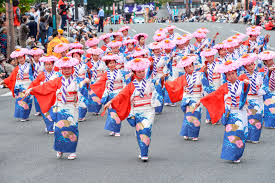 Hakata Dontaku Festival — Fukuoka, May 3–4
If you can only attend one Golden Week event, make it this one. The Hakata Dontaku is an annual festival held since 1962 during Golden Week, from May 3 to 4 in Fukuoka, featuring over 650 groups including 33,000 individual performers, and drawing an audience of over two million people during the two days.
The festival features groups of extravagantly costumed dancers who parade through the streets clapping shamoji - wooden rice scoops that became the festival's unlikely symbol when a merchant's wife rushed out to join a passing procession still holding the spoon she was cooking with.
Beyond the main parade route, more than 40 venues host performances ranging from traditional music and dance to modern entertainment, creating a festive atmosphere that extends throughout the Hakata and Tenjin areas. Most events are free to attend and easily accessible from central transport hubs. A pre-event evening takes place on May 2, when Meiji-dori — one of Fukuoka's main thoroughfares — is closed to traffic and transformed into Dontaku Street.
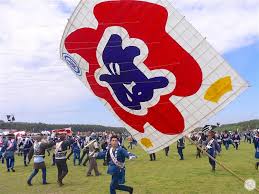
Hamamatsu Festival — Hamamatsu, May 3–5
One of the most distinctive Golden Week festivals, and far less visited by international tourists than it deserves. The Hamamatsu Festival celebrates Children's Day with a kite-fighting competition over the coastal dunes at Nakatajima — teams battle to cut each other's kite strings over the ocean.
During the evenings, a free procession of large ornate parade floats, each one representing a district of Hamamatsu, moves through the streets starting around 6:30pm, continuing very late into the night. Children playing traditional Japanese instruments ride the floats while adults carrying lanterns and flags pull them along the road. Hamamatsu is an easy day trip or overnight stop on the Shinkansen between Tokyo and Osaka — a perfect detour.
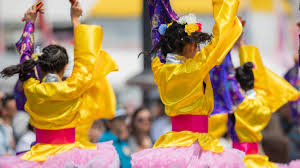
Hiroshima Flower Festival — Hiroshima, May 3–5
The Hiroshima Flower Festival is one of the largest outdoor festivals in Western Japan, taking place along the Peace Boulevard near Hiroshima Peace Memorial Park. Live stages, dance performances, food stalls, and a grand parade draw over one million visitors across the three days. Combining the festival with a visit to the Peace Memorial Museum and Miyajima Island makes Hiroshima one of the most compelling Golden Week destinations outside the Kansai corridor.
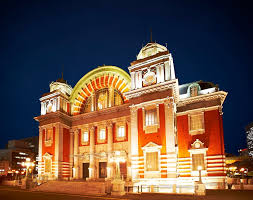
Nakanoshima Festival — Osaka, May 3–5
The Nakanoshima Festival, held May 3–5, is described as Japan's largest citizen festival. In the square in front of the Central Public Hall, there are numerous food stalls, stages for singing, performances, and street performances. Simultaneously, the Nakanoshima Film Festival and a flea market are also held. Nakanoshima Island sits in the Dojima River in central Osaka, surrounded by bridges and Meiji-era Western architecture. It is one of the most scenic festival venues in the city and extremely easy to reach from Namba or Umeda.
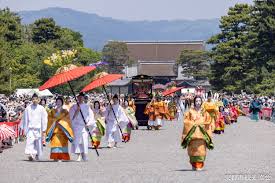
Aoi Matsuri Preparations — Kyoto, late April–May
Kyoto's Aoi Matsuri — one of the three great festivals of the ancient capital — officially takes place on May 15, after Golden Week ends. But during Golden Week itself, the preparation phase begins, and visitors can witness parade rehearsals, kimono processions, and equestrian performance previews. These rehearsals are significantly less crowded than the main event and offer an intimate view of a tradition that has continued since the 6th century.
City-by-City Guide for Golden Week 2026
Tokyo During Golden Week
Tokyo is the most counterintuitive Golden Week destination. While it is Japan's largest city and therefore draws enormous visitor numbers, it is also the city most of its residents leave — heading to Kyoto, Osaka, or their hometowns. Tokyo is less crowded than usual during Golden Week, as most local residents travel elsewhere, though attractions like Tokyo Disneyland, Fuji-Q Highland, Shibuya Sky, and Tokyo Skytree become crowded with visitors from outside the city. The result is a Tokyo that feels unusually open in some respects — restaurants with walk-in availability, galleries without queues — while specific tourist attractions hit their annual peaks. Plan around this paradox: seek out neighbourhood experience over landmark-ticking.
What to do in Tokyo during Golden Week: Sensoji Temple in Asakusa holds traditional performances including geisha parades and kite exhibitions. Ueno Park displays koinobori installations and hosts outdoor events. Shinjuku Gyoen and Yoyogi Park are at their finest in early May — fresh green canopies, warm afternoons, impromptu musical performances. Showa Kinen Park in Tachikawa offers free admission on April 29 (Showa Day).
→ Find Tokyo events during Golden Week
Kyoto During Golden Week
Kyoto is the most debated Golden Week destination. It is genuinely crowded — more so than almost anywhere else in Japan — and the most popular sites like Fushimi Inari, Kinkakuji, and the Arashiyama bamboo grove operate at extreme capacity. At the same time, the city's temple gardens are at their most beautiful in early May, with azaleas, wisteria, and fresh moss.
The strategy: go early, go deep. Arrive at major sites by 7:30am before tour groups begin. Explore lesser-known temples like Funda-in, Shorenin, and Chishakuin where the gardens are excellent and the crowds thin. Evenings at Kodai-ji Temple feature spring illuminations with projection mapping — genuinely special.
→ Find Kyoto events during Golden Week
Osaka During Golden Week
Osaka absorbs Golden Week crowds better than Kyoto because it is a larger, more modern city with wider streets and a population that genuinely embraces communal celebration. The Nakanoshima Festival (May 3–5) is the centrepiece, but street food energy runs throughout the city for the entire week. Dotonbori and Shinsaibashi are at full roar.
Osaka Maishima Seaside Park hosts the Nemophila Festival from April 11 to May 10, featuring a stunning display of around one million Nemophila plants blooming across approximately 4.4 hectares, with a picturesque view of Osaka Bay. This is one of the most photographed spring events in Japan and is worth the short trip from the city centre.
→ Find Osaka events during Golden Week
Kobe During Golden Week
Kobe is one of the most underrated Golden Week bases. It sits between Osaka and Himeji on the Hanshin/JR lines, making day trips straightforward. The city itself has a relaxed port-city character that doesn't overcrowd the way Kyoto does. The Kitano Ijinkan foreign residential district, Meriken Park waterfront, and the Arima Onsen hot spring town (40 minutes by direct bus) all deserve visits.
→ Find Kobe events during Golden Week
Fukuoka During Golden Week
For those who want a huge, ridiculously fun street party, Fukuoka absorbs the crowds better than older, narrower hubs, making it one of the most practical choices for Golden Week. The Hakata Dontaku festival (May 3–4) is reason enough to go. Beyond it, Fukuoka's yatai food stall culture along the Naka River makes evening dining one of the best experiences in Japan — grilled chicken, Hakata ramen, mentaiko, cold beer at a low counter with a plastic roof overhead.
→ Find Fukuoka events during Golden Week
Where to Go If You Want to Avoid the Crowds
Golden Week crowds concentrate along the Tokyo–Kyoto–Osaka corridor, coastal resort towns, and theme parks near major cities. If you route away from these, you can have a remarkable week with a fraction of the congestion.
Hirosaki, Aomori — if you missed cherry blossoms in Tokyo and Kyoto in March, Golden Week is your second chance. The sakura front moves north, and early May is the ideal time for late bloomers in the Tohoku region. Hirosaki Park in Aomori Prefecture is famous for its stunning concentration of trees, where the blossoms hang over the castle moat. The combination of cherry blossoms and a Edo-period castle is one of the most beautiful spring sights in Japan.
Kanazawa — Often called "Little Kyoto" but with dramatically smaller crowds. Kenrokuen Garden, one of Japan's three great gardens, is spectacular in early May. The Higashi Chaya geisha district, Omicho fish market, and samurai quarters make it a complete destination. Accessible by Shinkansen from Tokyo in two and a half hours.
Nara — Close enough to Kyoto and Osaka to be a day trip but substantial enough for an overnight. Nara Park is lush and green during Golden Week, with deer roaming freely among the ancient temples. Todaiji Temple, one of the largest wooden structures on Earth, and the forested paths of Kasuga Taisha Shrine are at their finest in early May.
Shikoku — The least-visited of Japan's four main islands and spectacularly beautiful in spring. The Iya Valley offers dramatic gorge scenery and vine bridges. The 88-temple pilgrimage route passes through landscapes that are genuinely remote. Far fewer tourists than Honshu.
What to See in Nature During Golden Week
Cherry blossoms are largely over in central Japan by Golden Week — Tokyo and Kyoto typically peak in late March and early April. But nature offers equally compelling spectacles during the holiday.
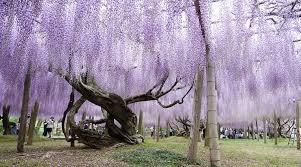
Wisteria — The wisteria season peaks in late April to early May. Ashikaga Flower Park in Tochigi Prefecture is the most famous viewing site, with 150-year-old wisteria trellises spanning over 1,000 square metres. Book tickets well in advance — they sell out. Byodoin Temple in Uji (near Kyoto) also has ancient wisteria in bloom.
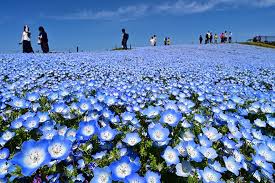
Nemophila — Hitachi Seaside Park in Ibaraki Prefecture features 4.5 million blue nemophila flowers covering an entire hillside. The view — a rippling blue field stretching to the horizon — is one of Japan's most photographed spring landscapes. Osaka's Maishima Seaside Park runs its own Nemophila Festival through May 10, with one million plants blooming with a view of Osaka Bay.
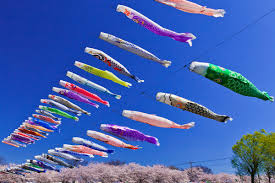
Koinobori — Not a natural phenomenon, but worth seeking out. Towns across Japan string hundreds of carp streamers across rivers for Children's Day. Kazo in Saitama Prefecture flies Japan's largest koinobori (100 metres long) over the Tone River.
Practical Tips: How to Do Golden Week Right
Book the Shinkansen early. Seat reservations for Golden Week open exactly one month in advance. For April 29, that is March 29. For May 3–6, that is April 3–6. Set calendar reminders. For Shinkansen seats, book one month early and consider the JR Pass or pay the extra fee for reserved seating.
Move against the flow. The busiest Shinkansen direction on April 29 is outbound from Tokyo. On May 5–6, it reverses — return journeys are the bottleneck. If you can structure your trip to move in the opposite direction of the majority, you will have a far more comfortable experience.
Expect longer waits at popular restaurants. Many restaurants do not take reservations during Golden Week or fill their reservation slots immediately. Research in advance, eat dinner early (before 6pm), and keep a list of alternatives.
Use IC cards, not cash. Your Suica or ICOCA card will be faster than cash at every turnstile and konbini during the busiest travel days. Load it up before April 29.
Early mornings are your best friend. The most visited sites — Fushimi Inari, Kinkakuji, Arashiyama — are manageable before 8am. By 10am they are at full capacity. Restructure your days around early starts and return to your accommodation for a midday rest.
Day trips from smaller bases. Consider basing yourself in Kobe, Nara, or Kanazawa rather than Kyoto. You can still access Kyoto for a morning visit while returning to a calmer city for the evening.
Golden Week 2026: Key Dates at a Glance
| Wed, April 29 | Showa Day — Golden Week begins. Free entry at Showa Kinen Park, Tokyo |
| Thu–Fri, April 30–May 1 | Not public holidays, but widely taken as annual leave |
| Sat, May 2 | Hakata Dontaku opening night, Fukuoka |
| Sun, May 3 | Constitution Memorial Day. Hakata Dontaku Day 1. Hamamatsu Festival begins. Hiroshima Flower Festival begins. Nakanoshima Festival begins |
| Mon, May 4 | Greenery Day. Hakata Dontaku Day 2 (final). All three city festivals continue |
| Tue, May 5 | Children's Day. Koinobori displayed nationally. Hamamatsu, Hiroshima, Nakanoshima festivals conclude |
| Wed, May 6 | Substitute holiday (Constitution Memorial Day observed). Golden Week officially ends |
Finding Events on What's On Japan
Every event listed on this site is updated daily, translated from Japanese sources, and filtered for quality. Use the links below to build your own Golden Week itinerary by city:
Find events happening near you
Browse hundreds of events across Japan — translated from Japanese, updated regularly.
Browse Events